12 Small Nursery Layout Ideas Clever Space Saving Designs
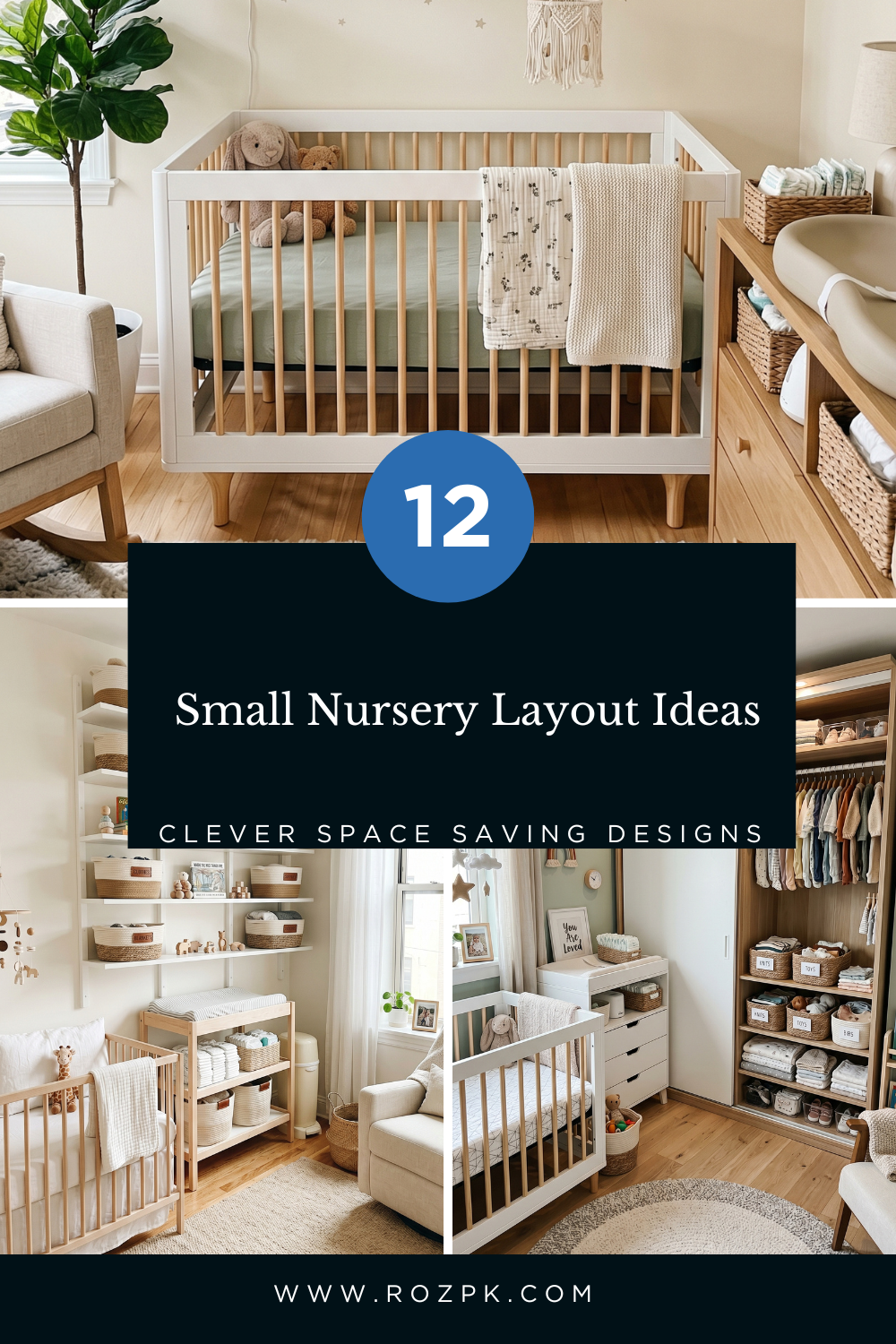
Designing a small nursery can feel challenging, especially when you’re trying to balance comfort, functionality, and style in a limited space. However, with thoughtful planning and clever design choices, even the smallest room can become a cozy and efficient haven for your baby. The key is to maximize every inch while keeping the layout open, safe, and easy to navigate. From multi-functional furniture to smart storage solutions, small nursery layouts can be both practical and visually appealing.
Creating a calm and organized environment is essential not only for your baby’s comfort but also for your daily routine. By focusing on space-saving designs, you can ensure that everything you need is within reach without making the room feel cluttered. In this guide, you’ll discover 12 small nursery layout ideas that combine creativity and efficiency to help you design a beautiful, functional space for your little one.
1. Crib in the Corner Layout
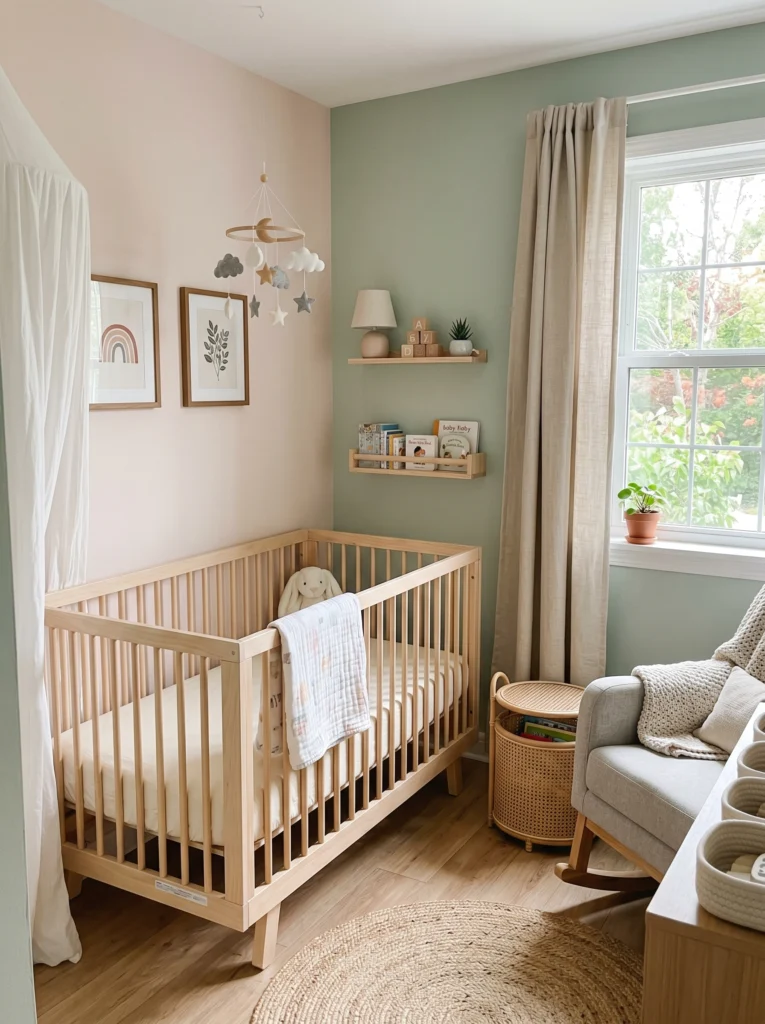
Placing the crib in the corner is one of the simplest yet most effective ways to save space in a small nursery. Instead of positioning it in the center of the room, tucking it neatly into a corner frees up valuable floor area for other essential furniture and movement. This layout also creates a cozy and secure sleeping environment for your baby, as the walls naturally enclose the crib. To enhance functionality, you can use the adjacent walls for shelves or wall-mounted storage, keeping essentials like diapers, toys, and blankets within easy reach.
2. Wall-Mounted Changing Station
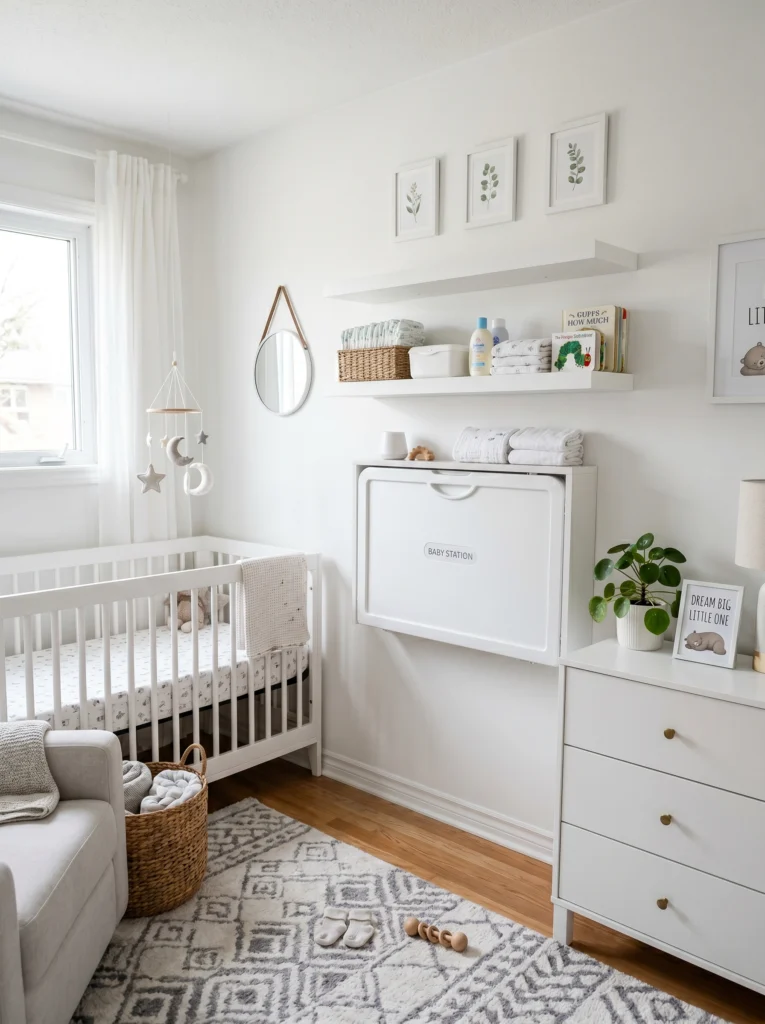
A wall-mounted changing station is a game-changer for small nurseries where floor space is limited. Instead of using a traditional bulky changing table, this foldable option attaches directly to the wall and can be tucked away when not in use. This design keeps the room open and clutter-free while still providing a safe and convenient place for diaper changes. Many wall-mounted stations come with built-in storage compartments for wipes, diapers, and creams, making organization easier. Positioning it near the crib or storage area can streamline your daily routine.
3. Multi-Functional Crib Designs
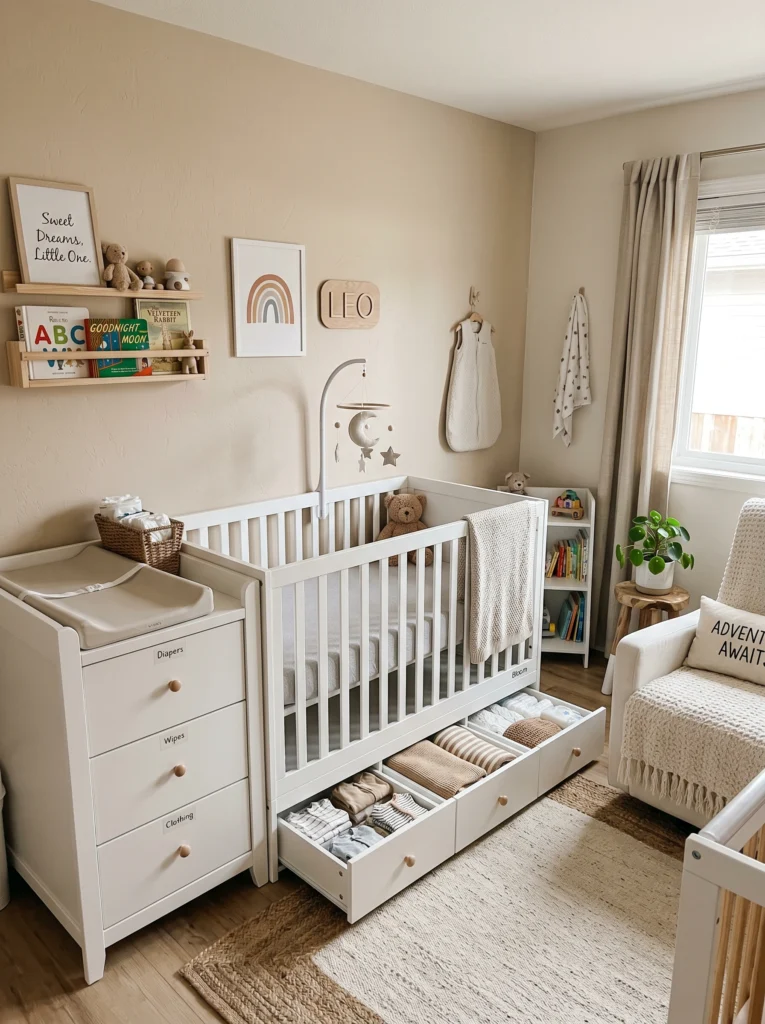
Multi-functional cribs are ideal for small nurseries because they combine several features into one compact piece of furniture. These cribs often include built-in drawers, changing tables, or even convertible designs that grow with your child. By integrating storage directly into the crib, you reduce the need for additional furniture, freeing up valuable floor space. This approach not only keeps the room organized but also simplifies your layout. Choosing a neutral design ensures the crib blends seamlessly with the rest of the nursery decor.
See Also: 15 Modern Backyard Design Ideas Sleek Outdoor Living Inspiration
4. Vertical Storage Solutions
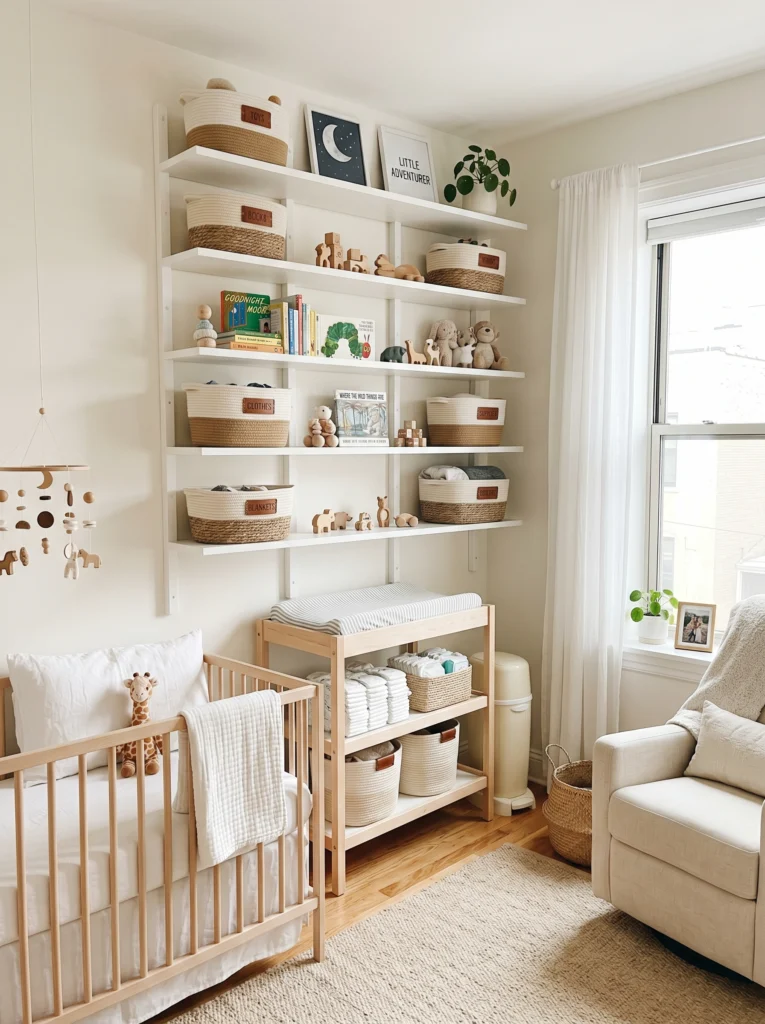
When floor space is limited, going vertical is the best way to maximize storage in a small nursery. Installing shelves, cabinets, or pegboards on the walls allows you to store essentials without crowding the room. Vertical storage keeps items organized and easily accessible while maintaining an open and airy feel. You can use baskets or bins on shelves to categorize items like clothes, toys, and diapers. Hanging organizers behind doors or on walls adds even more storage options.
5. Compact Rocking Chair Corner
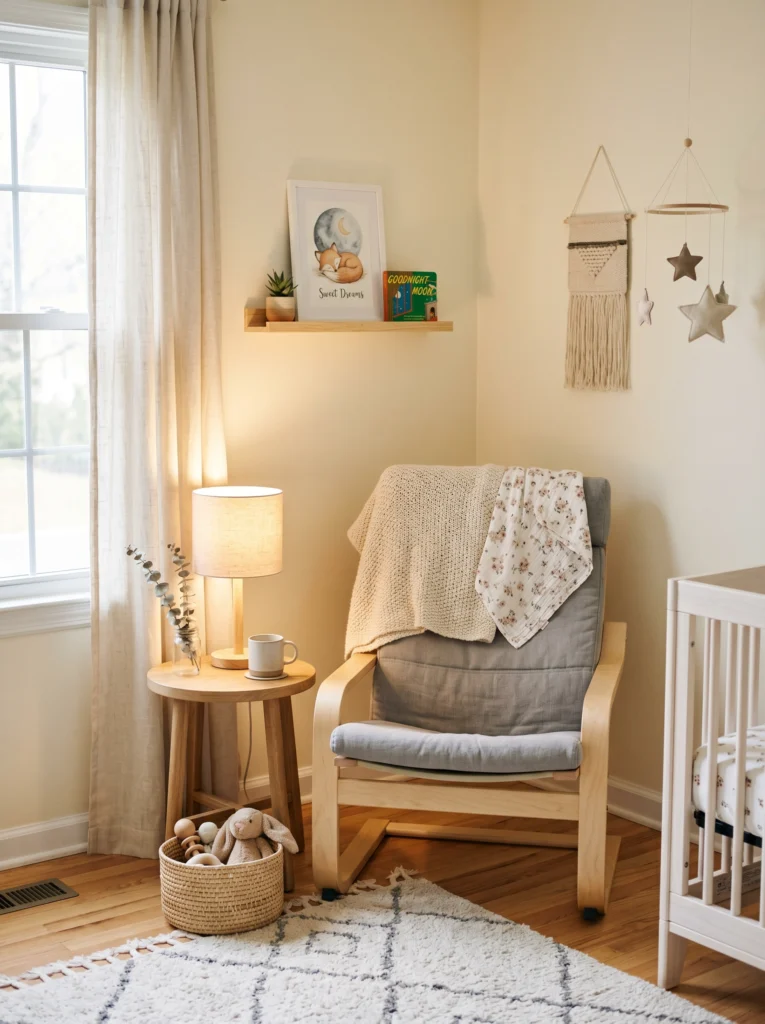
Creating a small, dedicated corner for a rocking chair or glider provides a comfortable spot for feeding and soothing your baby. In a small nursery, choosing a compact chair with a slim profile is essential to avoid overcrowding. Positioning the chair in a corner helps define the space while keeping the center of the room open. Adding a small side table or wall-mounted shelf nearby allows you to keep essentials like bottles or books within reach. Soft lighting, such as a floor lamp or wall sconce, can enhance the cozy atmosphere. This layout ensures that you have a functional and relaxing area without compromising space efficiency. It’s a thoughtful addition that balances comfort and practicality.
6. Under-Crib Storage
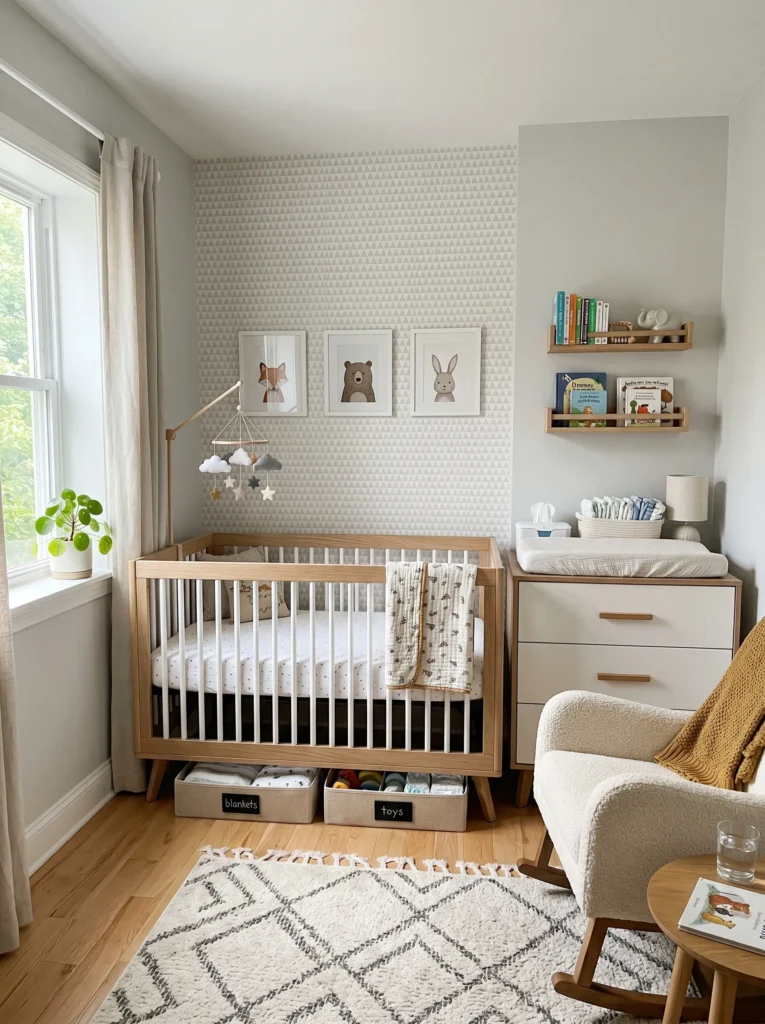
Utilizing the space under the crib is a smart way to add storage without taking up extra room. Storage bins, drawers, or baskets can be placed underneath to store items like blankets, clothes, or toys. This hidden storage keeps the nursery looking tidy and uncluttered while maximizing every inch of space. Choosing containers with wheels or handles makes it easier to access items when needed. Keeping the storage organized ensures you can quickly find what you need. This idea works particularly well in very small nurseries where additional furniture is not an option. It’s a simple yet effective solution for maintaining order.
7. Sliding Door Wardrobe
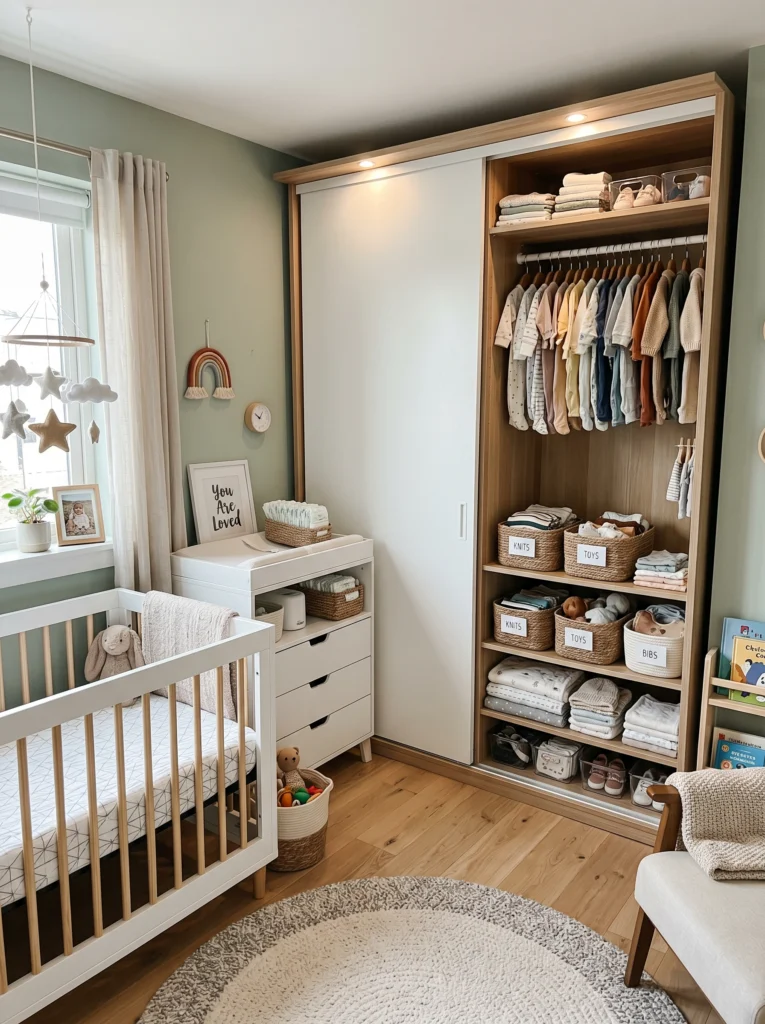
A sliding door wardrobe is a space-saving alternative to traditional closets with swinging doors. In a small nursery, this design prevents doors from taking up extra space when opened. Sliding doors provide easy access to clothing and essentials while maintaining a sleek and modern look. Inside, you can organize items with shelves, hanging rods, and storage boxes. This type of wardrobe works well in narrow rooms where space is limited. Choosing light-colored finishes can help the room feel larger and brighter. It’s a practical solution that combines functionality with style.
8. Floating Shelves Above Furniture
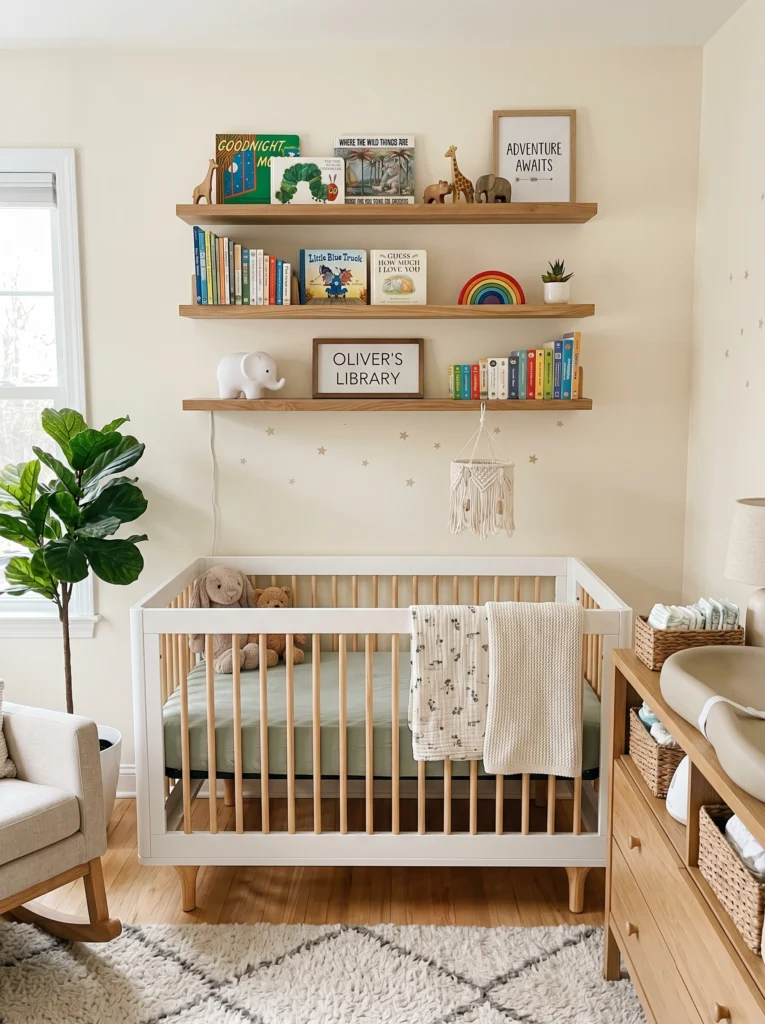
Installing floating shelves above furniture like the crib or changing area is a great way to maximize vertical space. These shelves can hold decorative items, books, or baby essentials without taking up floor space. Keeping frequently used items within reach makes daily routines more convenient. Choosing sturdy and well-installed shelves ensures safety. This layout adds both functionality and style, helping you create a visually appealing nursery while staying organized.
9. Foldable Furniture Pieces
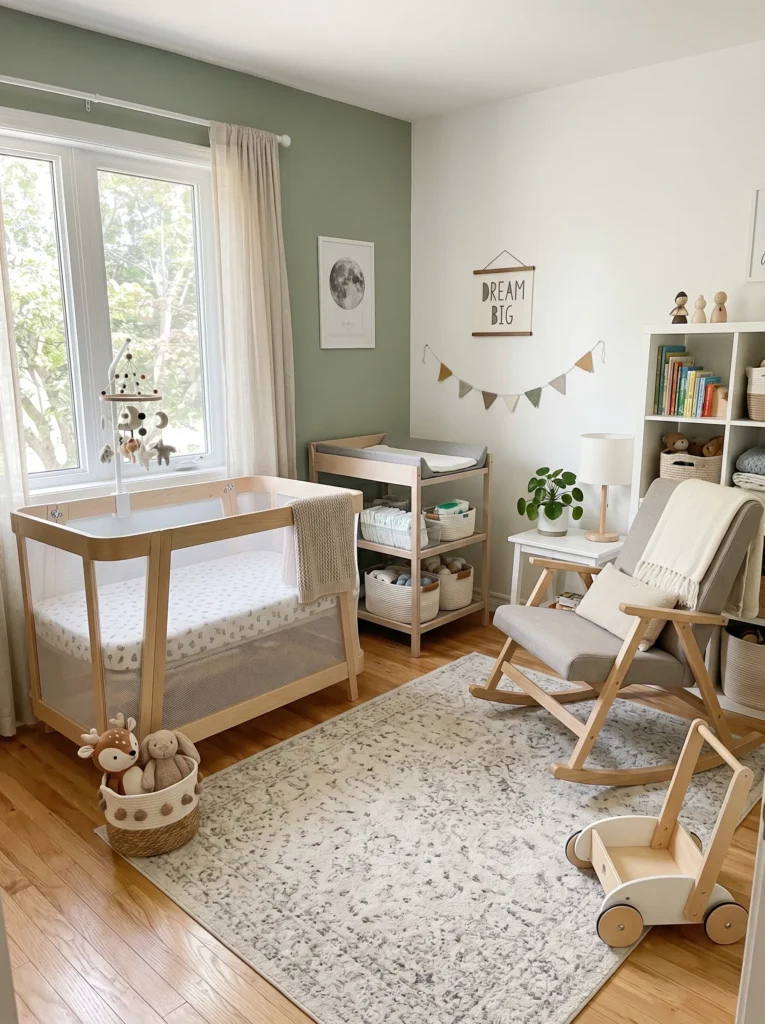
Foldable furniture is ideal for small nurseries because it can be easily stored when not in use. Items like foldable cribs, chairs, or tables provide flexibility and help keep the room uncluttered. This approach is especially useful in multi-purpose rooms where space needs to be shared. Choosing lightweight and durable designs ensures ease of use. Foldable furniture allows you to adapt the layout as needed, making it a practical and versatile solution.
10. Minimalist Layout Design
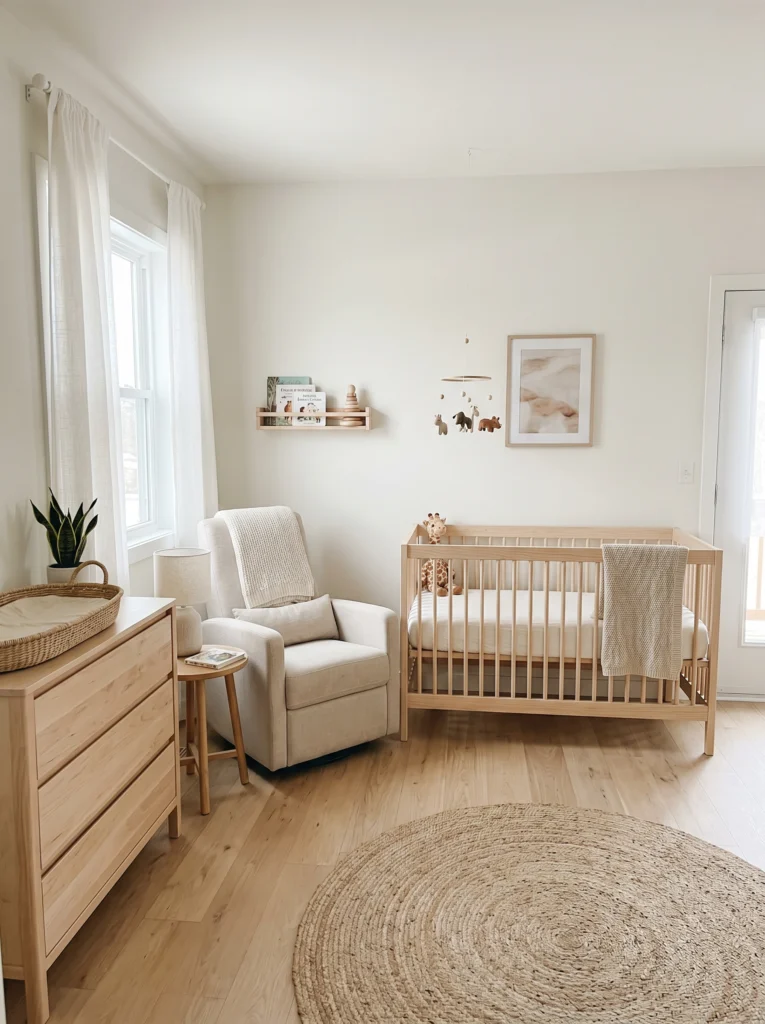
A minimalist layout focuses on keeping only the essentials in the nursery, reducing clutter and creating a calm environment. This approach uses simple furniture, neutral colors, and clean lines to make the space feel larger. Avoiding unnecessary decor ensures the room remains functional and easy to maintain. This design is ideal for small spaces, as it emphasizes openness and simplicity while still being stylish.
11. Shared Nursery Space
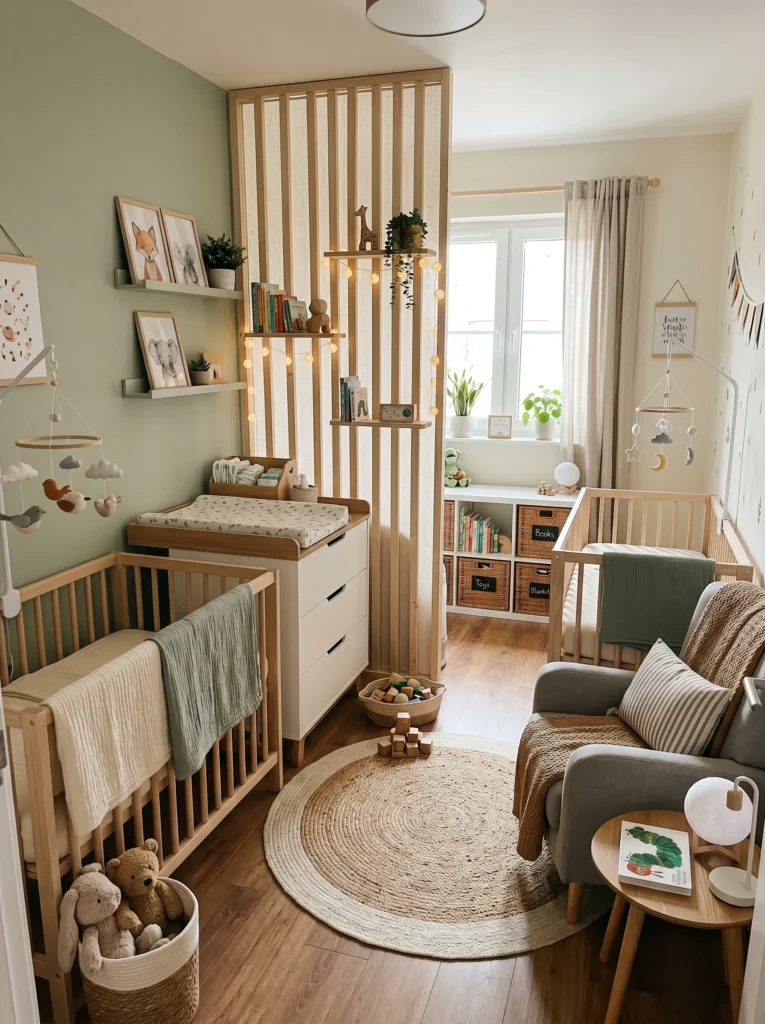
In some cases, a nursery may need to share space with another room, such as a bedroom. Using dividers, curtains, or rugs can help define the nursery area without requiring a separate room. This layout ensures functionality while maintaining a cohesive design. Choosing compact furniture and smart storage solutions helps keep the space organized. It’s a practical option for homes with limited space.
12. Built-In Storage Units
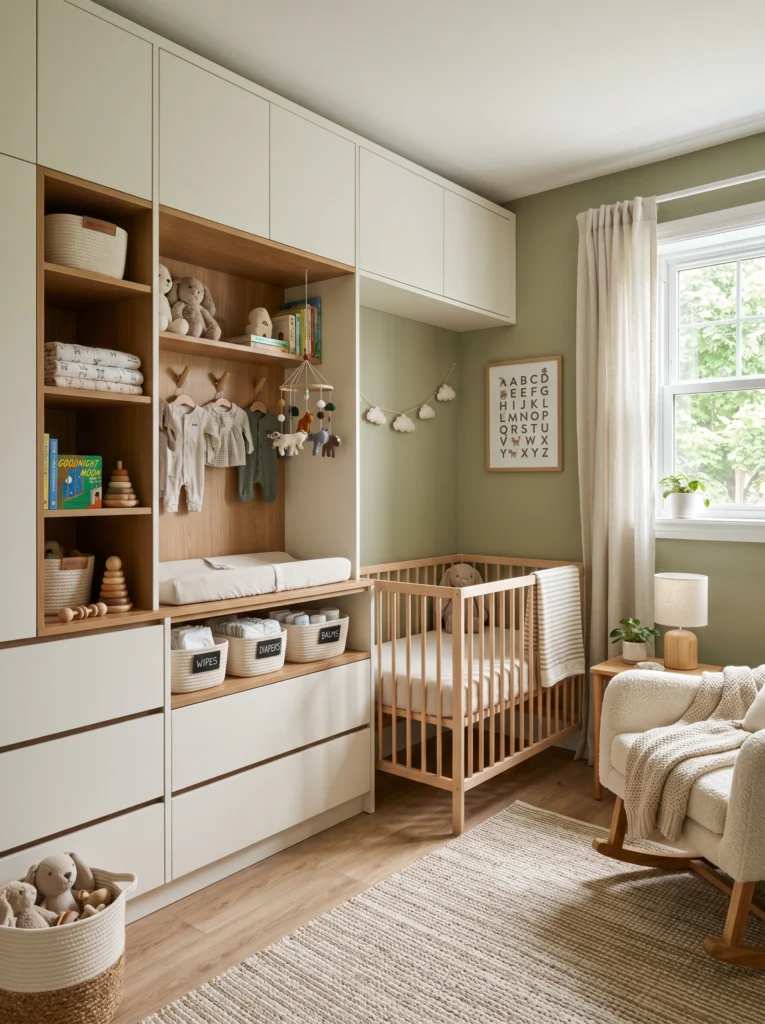
Built-in storage units are a great way to maximize space in a small nursery. Custom shelves, cabinets, or drawers can be designed to fit perfectly within the room, making use of every available inch. These units provide ample storage while maintaining a clean and seamless look. Built-in designs reduce the need for additional furniture, helping keep the space uncluttered. This idea combines efficiency with a polished aesthetic.
Final Words
Designing a small nursery is all about making thoughtful choices that balance comfort, functionality, and style. With the right layout and smart space-saving solutions, even the most compact room can become a peaceful and practical environment for both you and your baby. These 12 small nursery layout ideas show how creative planning like using vertical storage, multi-functional furniture, and minimalist design can transform limited space into something truly special.