13 Shared Kids Room Ideas Cute & Practical Bedroom Designs
Designing a shared kids’ room can be both exciting and challenging, especially when you need to balance space, functionality, and individual personality in one area. The goal is to create a room that feels comfortable for both children while still being organized, stylish, and practical for everyday use. Shared bedrooms often require smart planning to ensure each child has their own space for sleeping, studying, and storing personal belongings. With the right design approach, even a small room can be transformed into a cheerful and harmonious environment.
From bunk beds and divided zones to creative storage solutions and playful themes, shared kids’ rooms offer endless possibilities. The key is to combine functionality with fun, ensuring the space grows with your children over time. In this guide, we’ll explore 13 shared kids room ideas featuring cute and practical bedroom designs that maximize space while keeping the room cozy, organized, and visually appealing for both kids.
1. Classic Bunk Bed Setup
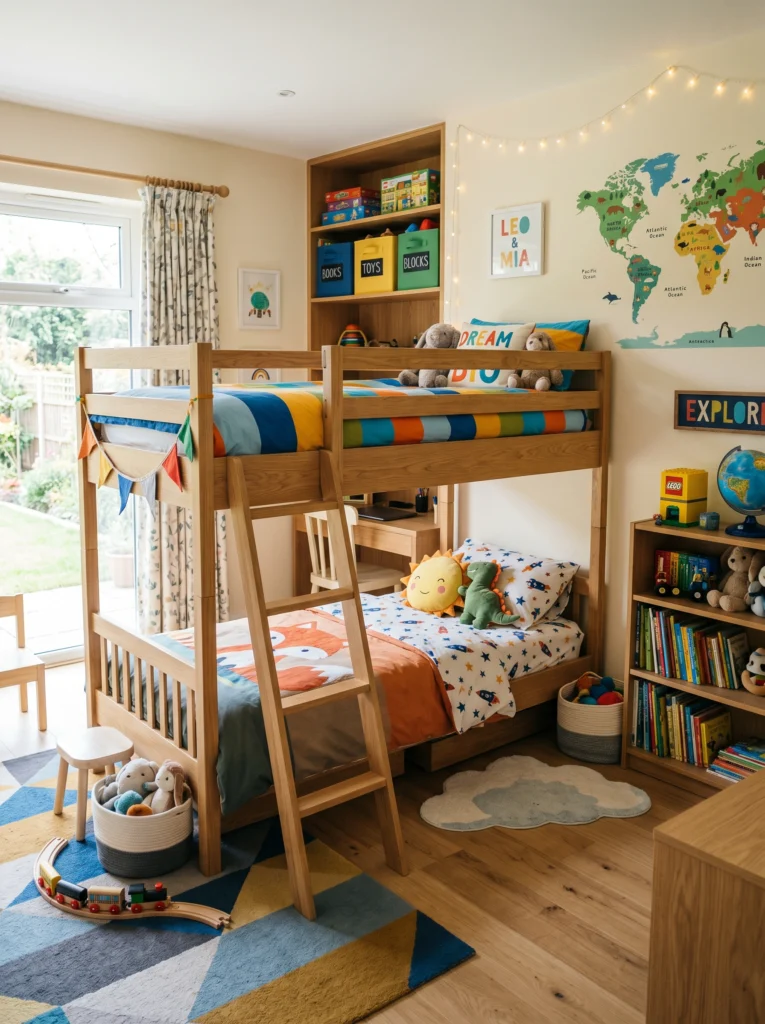
A classic bunk bed setup is one of the most popular and space-efficient solutions for a shared kids’ room. By stacking beds vertically, you instantly free up valuable floor space for play, study, or storage. This design works especially well in smaller rooms where horizontal space is limited. Each child gets their own sleeping area while still sharing the same footprint. Modern bunk beds often come with added features like built-in drawers, shelves, or even small desks, making them even more functional. Safety is a key consideration, so sturdy frames and secure railings are essential. Personalizing each bunk with different bedding, colors, or wall decor helps give each child their own identity within the shared space. This setup encourages organization and cooperation while keeping the room neat and practical.
2. Twin Beds with Divider Shelf
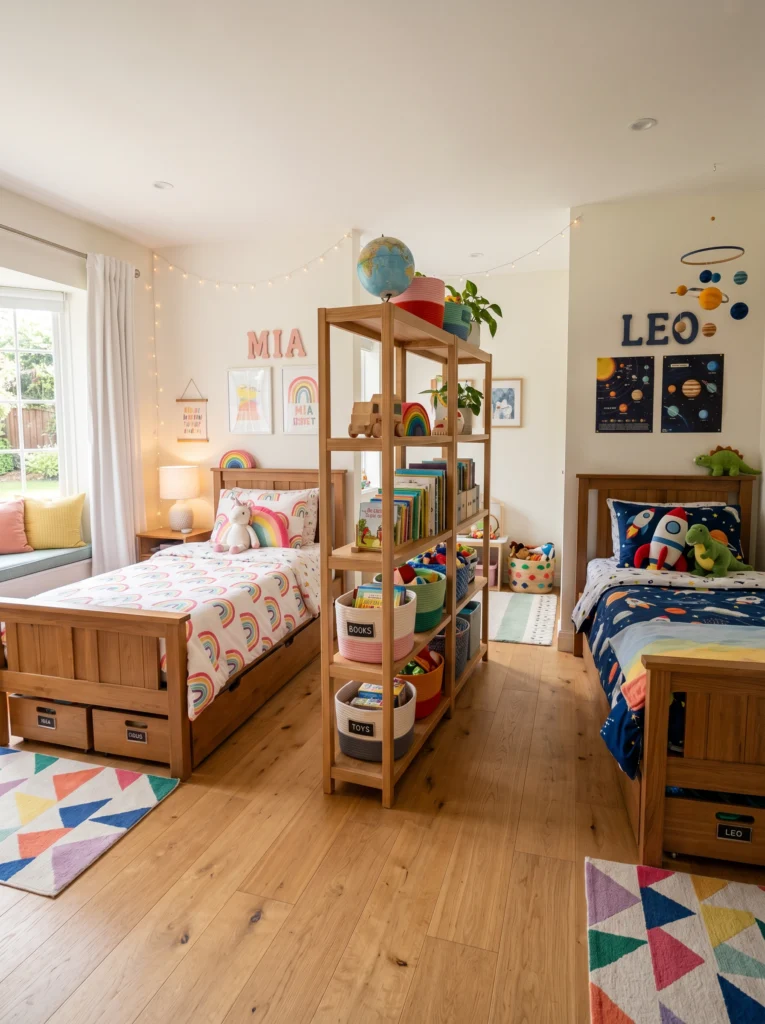
Twin beds separated by a central divider shelf offer both shared space and personal privacy for each child. This layout is ideal for siblings who want their own defined sleeping areas while still being in the same room. The divider shelf acts as a functional partition, providing storage for books, toys, and personal items. It eliminates the need for bulky walls while still creating a sense of separation. Each side of the room can be customized to reflect each child’s personality through colors, bedding, and decorations. This design promotes organization and helps maintain harmony between shared and personal spaces. It’s a practical solution that balances togetherness with individuality.
3. Shared Study Corner
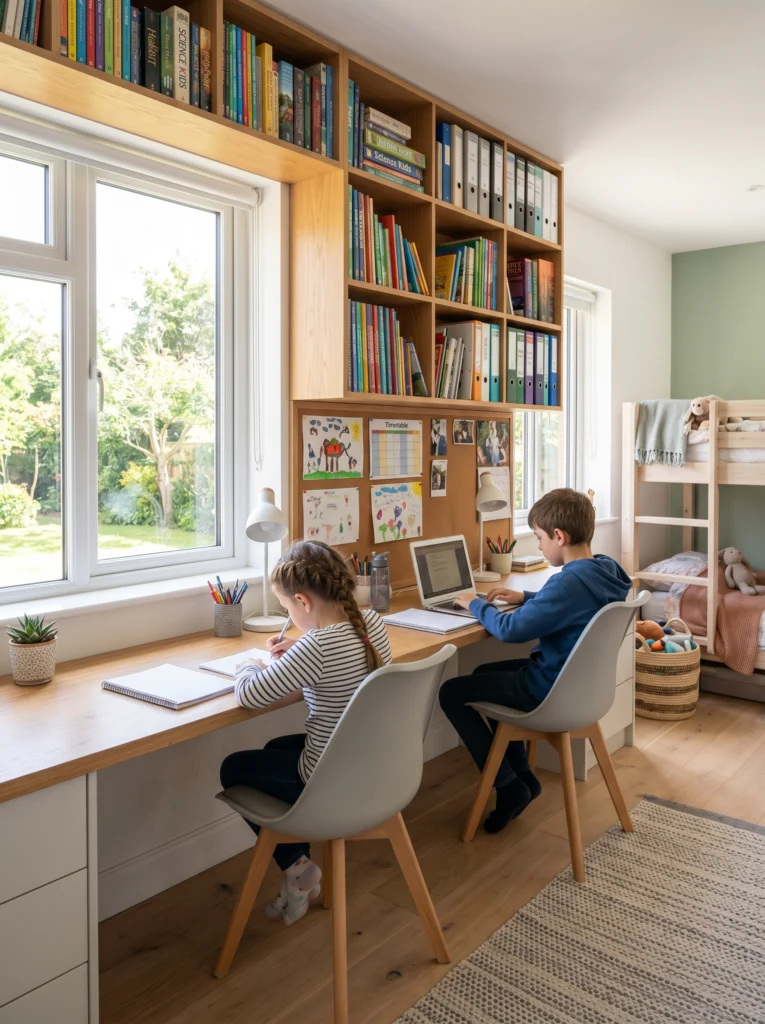
A shared study corner is essential for school-aged children sharing a room. This design features a long desk or two individual study spaces placed side by side, allowing both kids to focus on homework and creative activities. Proper lighting, such as desk lamps or natural window light, is important for productivity. Built-in shelves or wall-mounted organizers help keep school supplies neat and accessible. Even in a small room, a well-designed study corner encourages good study habits and organization. Personal touches like name labels or color-coded sections can help each child maintain their own space. This setup promotes learning while maximizing limited room space efficiently.
4. Color-Coded Personal Zones
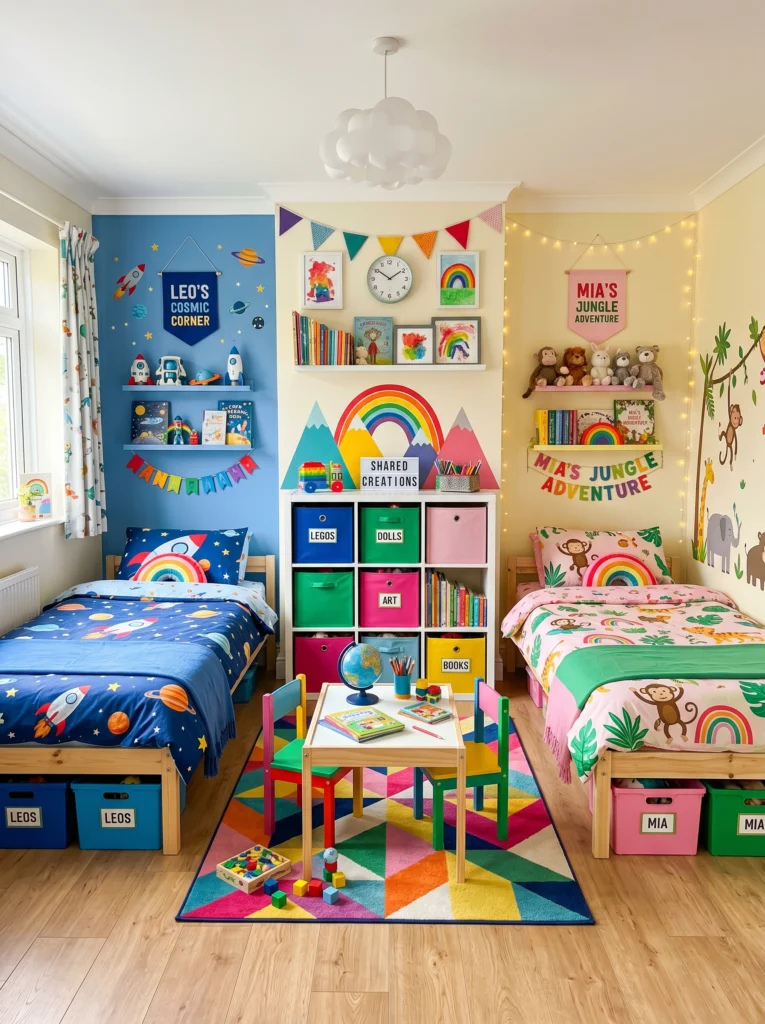
Color-coded personal zones help define individual spaces within a shared kids’ room. Each child is assigned a specific color theme that reflects in their bedding, wall decor, storage bins, and accessories. This approach makes it easy for children to identify their belongings while adding visual structure to the room. It also reduces conflicts over shared items and encourages responsibility. The overall design remains cohesive while still allowing personalization. Neutral base colors can be used for walls and furniture, with vibrant accents distinguishing each zone. This idea is simple yet highly effective for maintaining order and individuality in a shared space.
See Also: 12 Small Nursery Layout Ideas Clever Space Saving Designs
5. L-Shaped Bed Arrangement
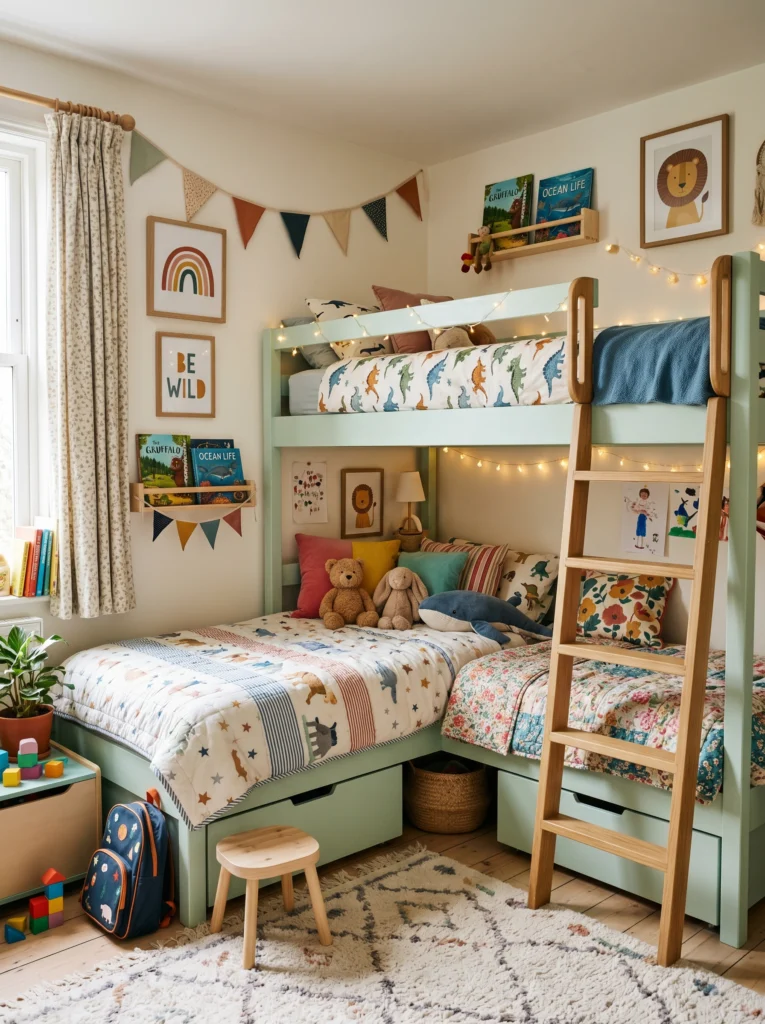
An L-shaped bed arrangement is a clever way to optimize corner space in a shared room. Placing beds perpendicular to each other creates a natural division while still keeping the room open. This layout works well for medium to small bedrooms, as it frees up central space for play or storage. The corner between the beds can be used for a small shelf or shared nightstand. Each child still gets their own defined sleeping area without needing extra partitions. This design feels cozy and balanced while maintaining efficient use of space. It also allows for easy customization on each side of the room.
6. Loft Bed with Play Area
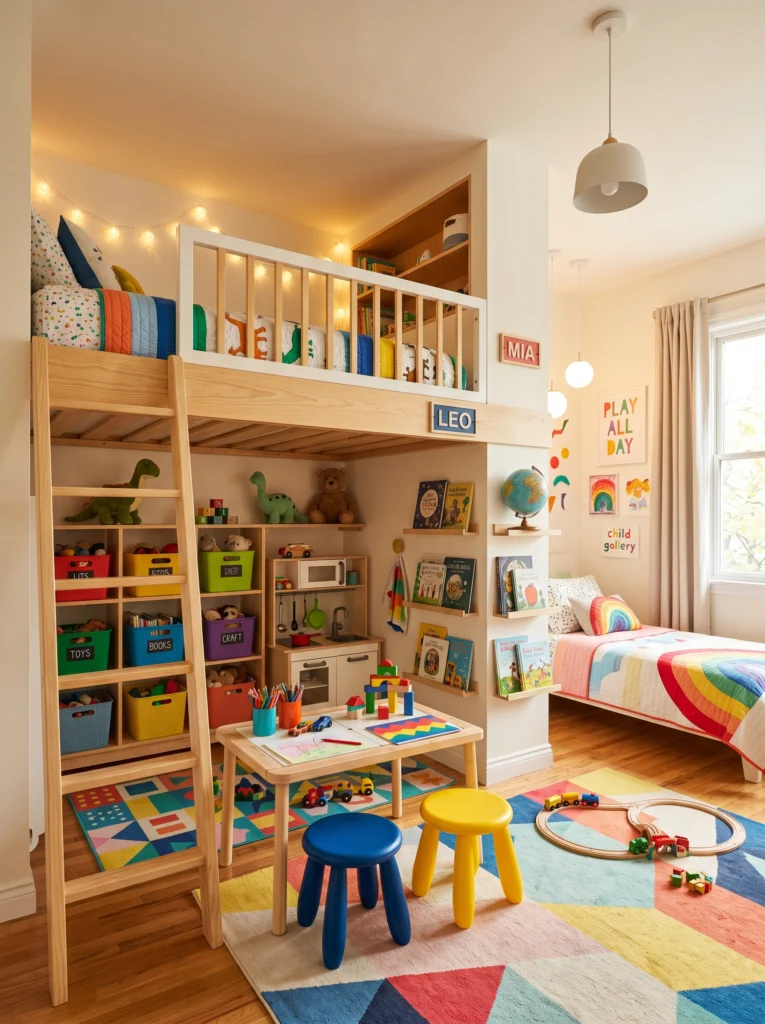
A loft bed design is perfect for maximizing vertical space in a shared kids’ room. One or both beds are elevated, creating usable space underneath for a play area, study desk, or storage. This setup is especially useful in smaller rooms where floor space is limited. The lower area can be customized with rugs, toy storage, or reading corners. Loft beds also add a fun element that children love. Safety rails and sturdy ladders are essential for security. This design combines creativity with practicality, making the room both functional and exciting.
7. Sliding Partition Room Divider
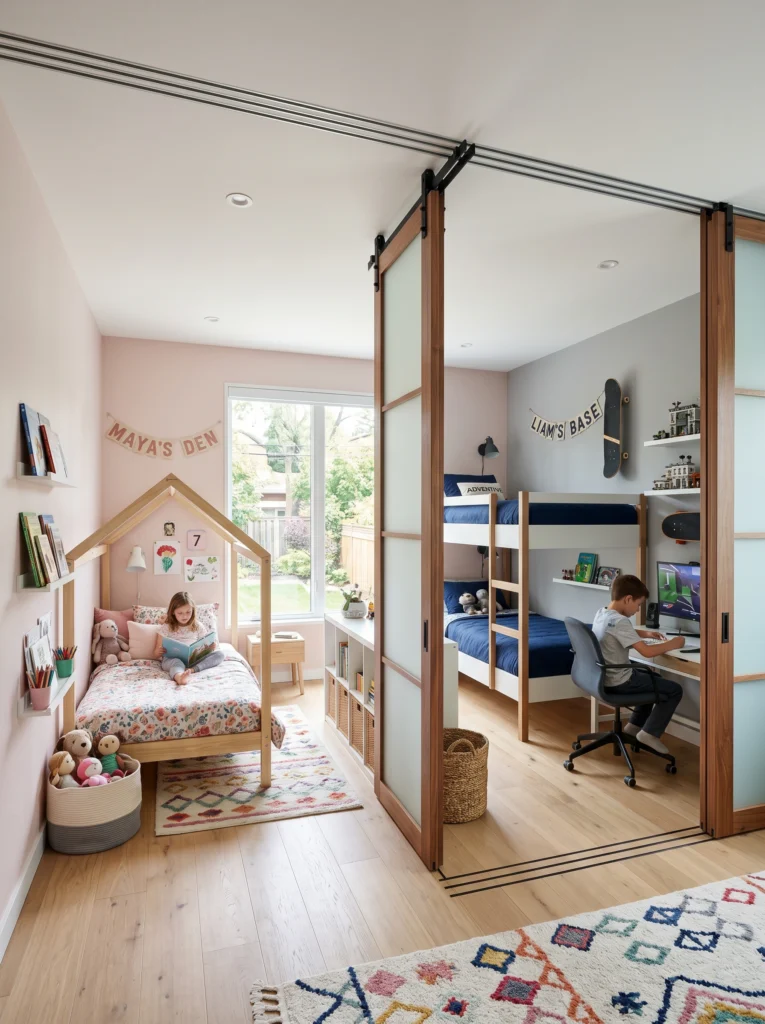
A sliding partition divider allows flexibility in a shared kids’ room by separating or opening up space as needed. This is ideal for siblings who sometimes want privacy but also enjoy shared playtime. The divider can be made of wood, glass, or fabric panels, depending on the design style. When open, the room feels spacious and connected; when closed, each child gets their own private area. This adaptable solution is perfect for growing children with changing needs. It also adds a modern and stylish touch to the room design.
8. Built-In Bunk Wall Unit
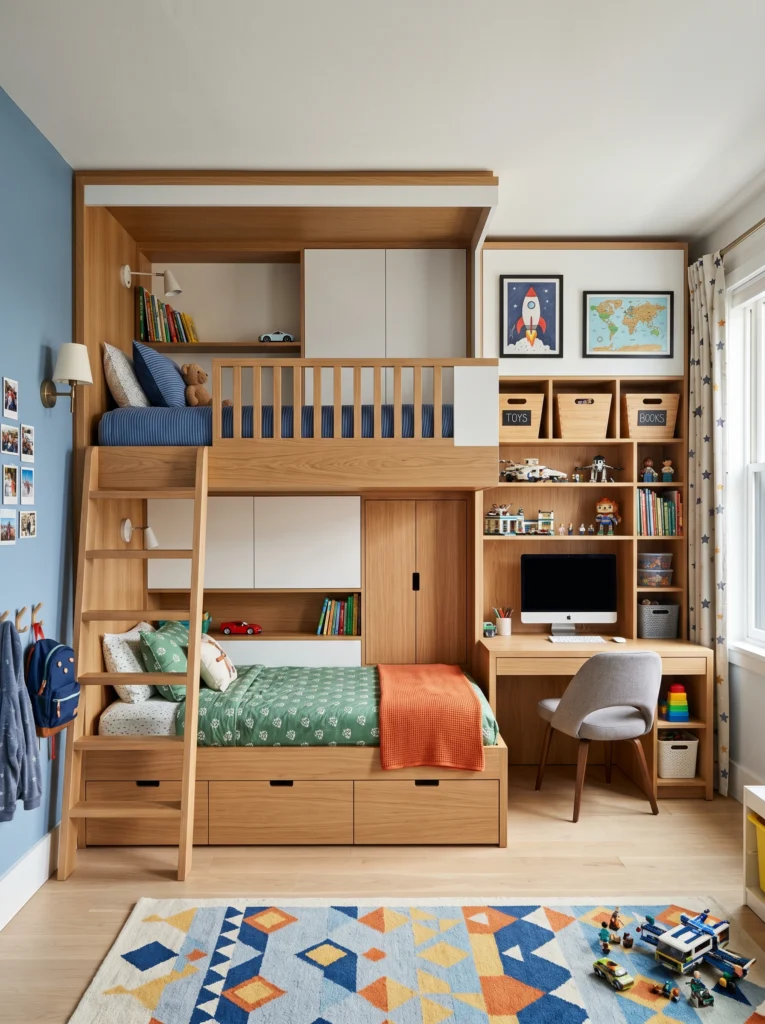
A built-in bunk wall unit integrates beds, storage, and shelves into one compact structure. This custom design is perfect for maximizing every inch of a shared room. Each child gets their own sleeping space along with dedicated storage compartments. The built-in structure keeps the room tidy and organized while maintaining a sleek appearance. This design is highly efficient and works especially well in narrow rooms. It can also include lighting and personal decor spaces for each child.
9. Shared Closet System
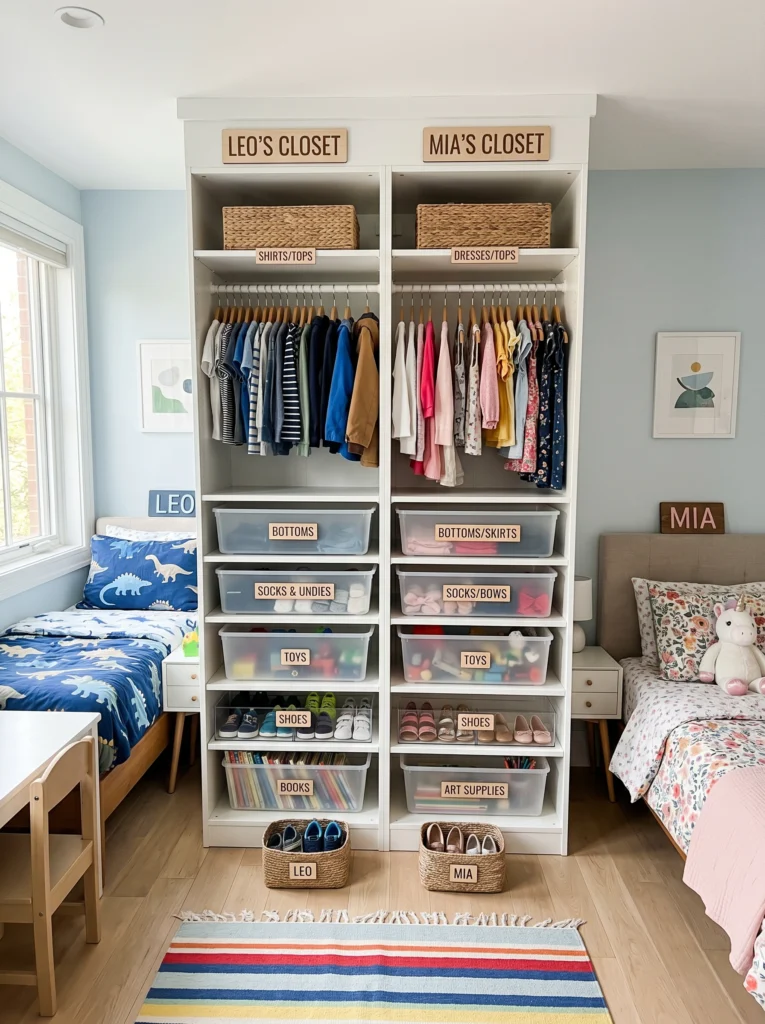
A shared closet system helps keep clothing and belongings organized in a shared kids’ room. Instead of separate wardrobes, a large divided closet with labeled sections ensures each child has their own space. Shelves, drawers, and hanging rods can be customized for individual needs. This reduces clutter and teaches organization skills. Using color labels or name tags helps avoid confusion. A well-designed shared closet improves functionality and keeps the room tidy.
10. Themed Matching Decor
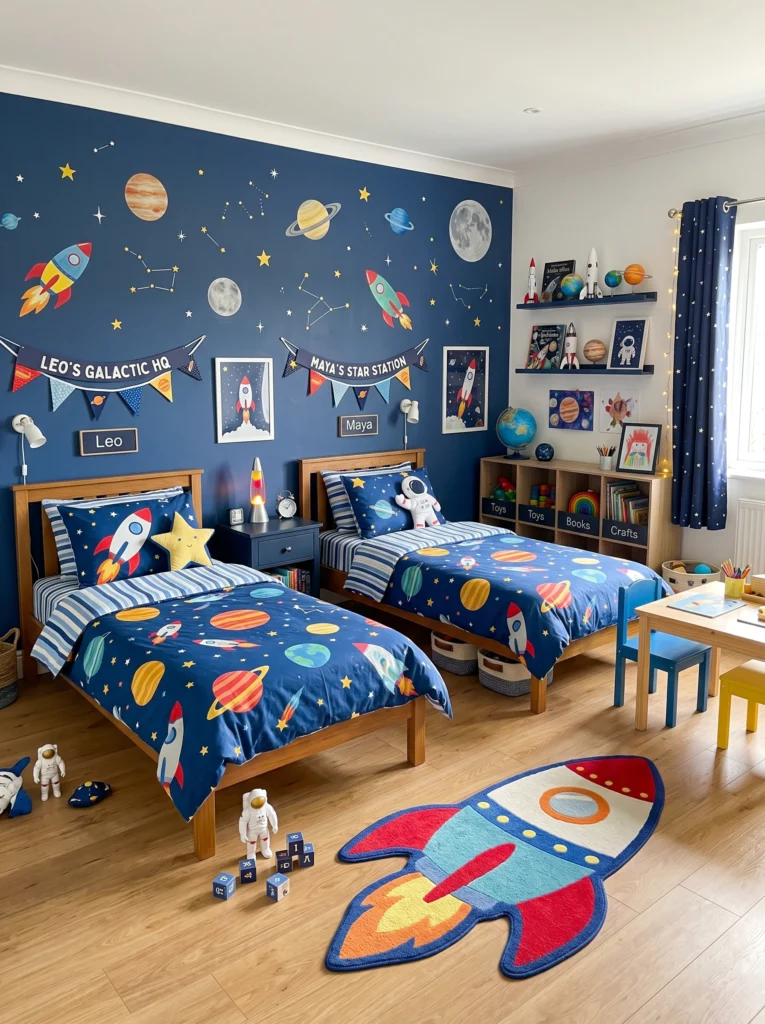
Themed matching decor creates harmony in a shared kids’ room while still allowing personalization. Both children follow a similar theme such as space, nature, or animals—but with slight variations in color or details. This keeps the room visually cohesive while reflecting individual interests. Matching furniture and coordinated decor elements help unify the design. This idea works well for siblings with similar tastes or younger children.
11. Under-Bed Storage Solutions
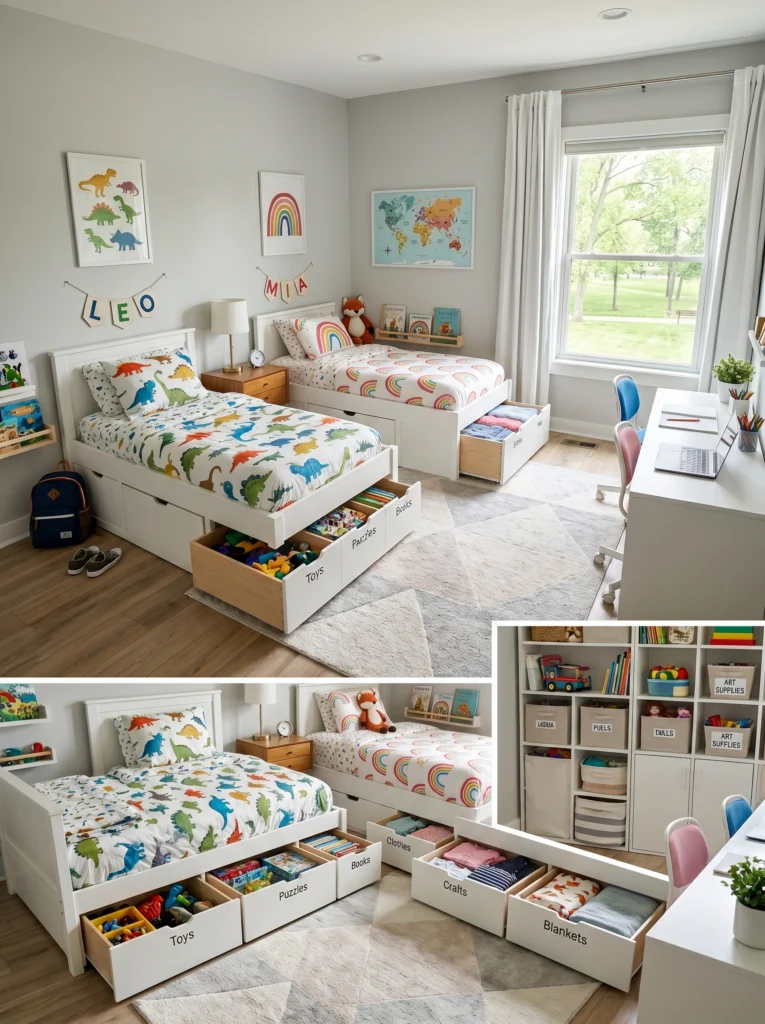
Under-bed storage is a practical way to maximize space in a shared kids’ room. Drawers, bins, or rolling boxes can be used to store toys, clothes, or school supplies. This keeps the room organized without adding extra furniture. Each child can have designated storage under their bed to maintain fairness and order. This solution is especially useful in smaller rooms where space is limited.
12. Shared Reading Nook
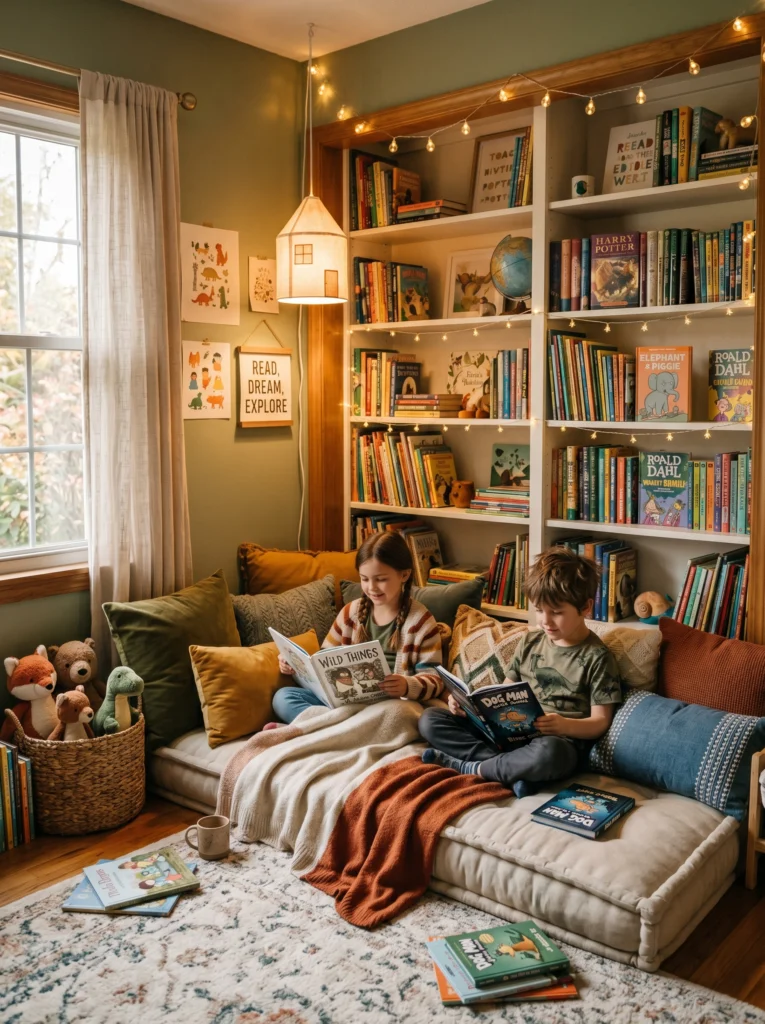
A shared reading nook creates a cozy space where both children can relax and enjoy books together. This can include bean bags, cushions, or a small bench placed near a bookshelf. Soft lighting and colorful decor make the space inviting. A shared nook encourages bonding and learning while saving space. It can be placed in a corner or window area for a calm atmosphere.
13. Minimalist Shared Layout
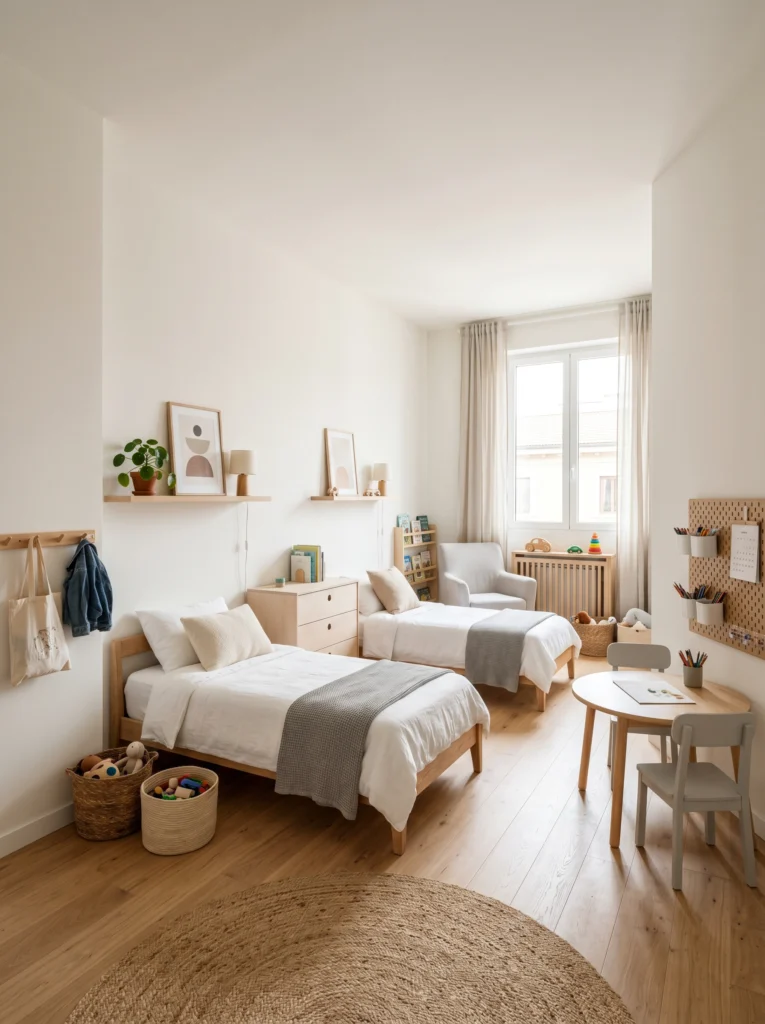
A minimalist shared kids’ room focuses on simplicity, open space, and essential furniture only. This design avoids clutter and uses neutral tones with subtle accents. Each item serves a purpose, ensuring the room remains functional and easy to maintain. This approach is ideal for small rooms or busy households. It creates a calm and balanced environment for children to grow and play.
Final Words
A well-designed shared kids’ room can beautifully balance individuality, functionality, and togetherness. With thoughtful planning and smart space-saving ideas, even a small room can comfortably accommodate two or more children without feeling crowded. These 13 design ideas show that creativity plays a key role in making shared spaces both practical and enjoyable.