14 Minimalist Bedroom Ideas Calm & Clutter Free Spaces
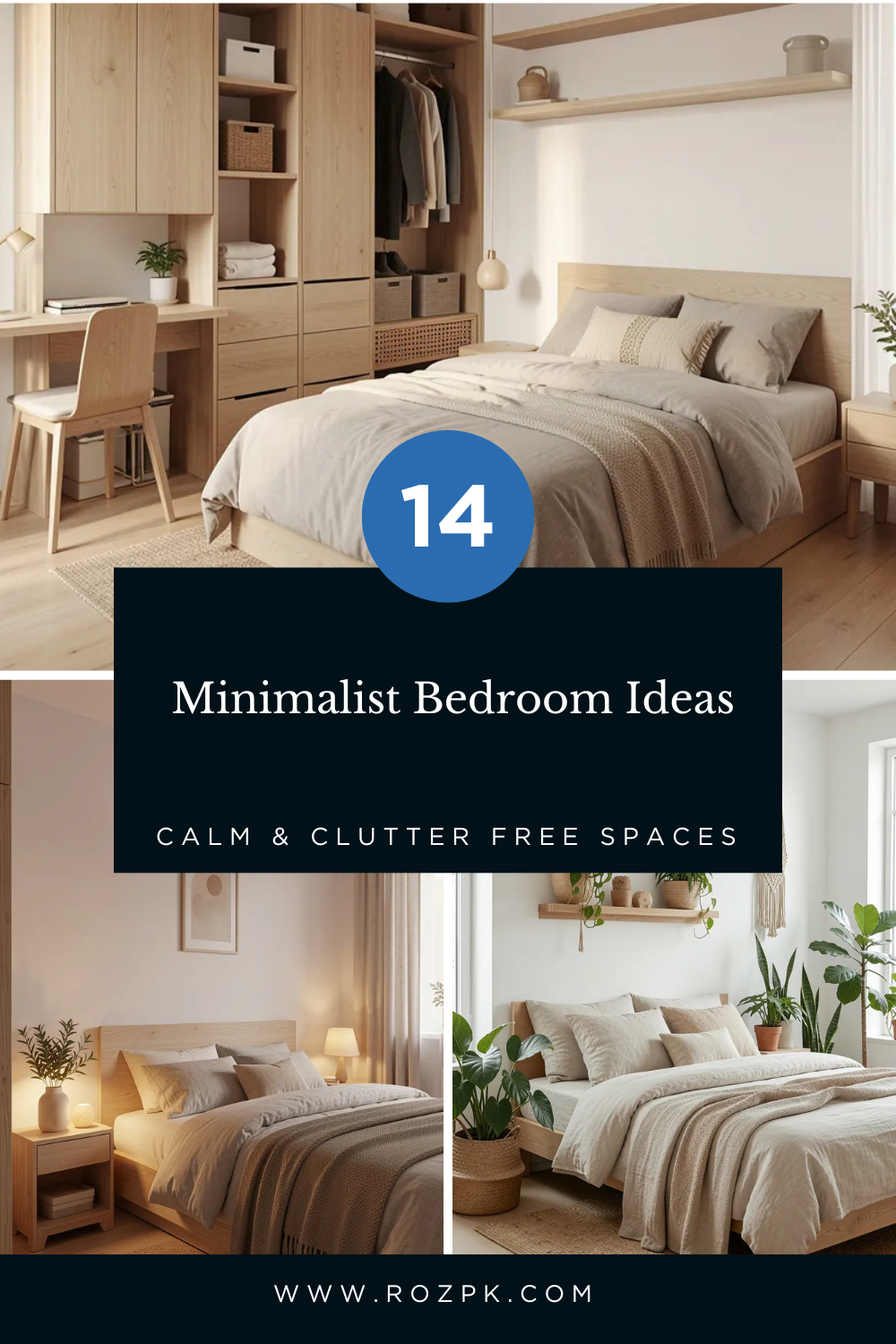
A minimalist bedroom is more than just a design trend it’s a lifestyle choice that promotes calm, clarity, and intentional living. By focusing on simplicity, clean lines, and clutter-free spaces, minimalist bedrooms create an environment that feels peaceful and refreshing. Instead of filling the room with unnecessary décor, this style emphasizes quality over quantity, allowing each piece to serve a purpose.
Neutral color palettes, natural materials, and functional furniture are key elements that define this look. The result is a space that feels open, airy, and easy to maintain. Whether you live in a small apartment or a spacious home, minimalist design can help you create a bedroom that supports relaxation and better sleep. In this guide, you’ll discover 14 minimalist bedroom ideas that combine style with practicality, helping you design a calm, clutter-free retreat that feels both modern and timeless.
1. Neutral Color Palette for a Calm Atmosphere
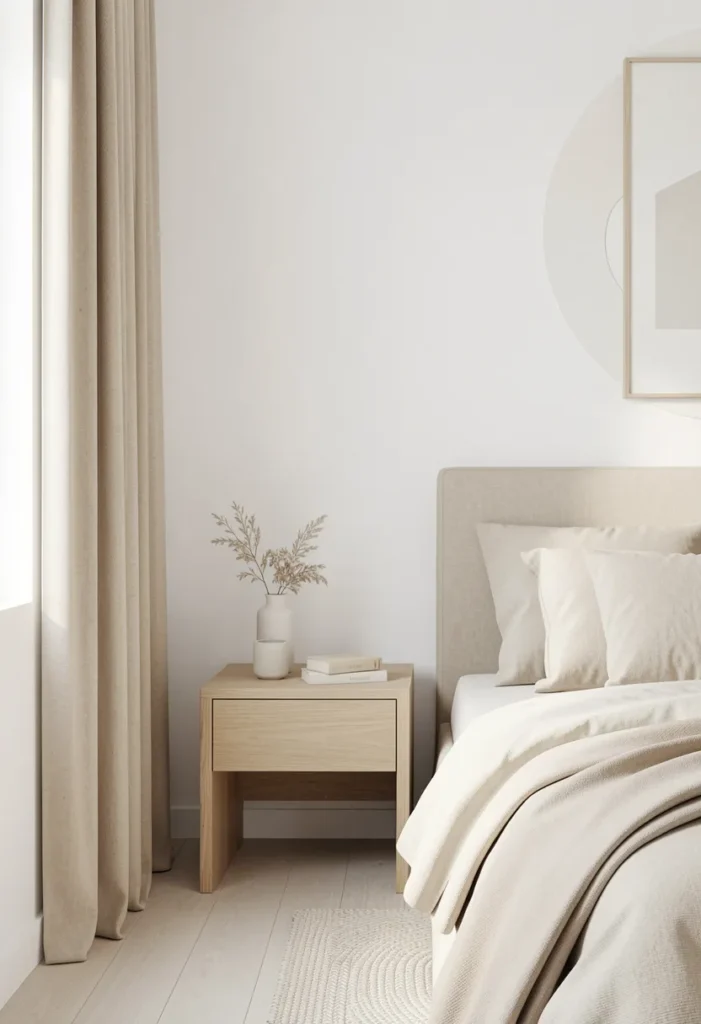
A neutral color palette is the foundation of a minimalist bedroom. Shades like white, beige, soft gray, and warm taupe create a soothing environment that feels open and uncluttered. These tones reflect light, making even small bedrooms appear larger and brighter.
2. Low-Profile Furniture for Open Space
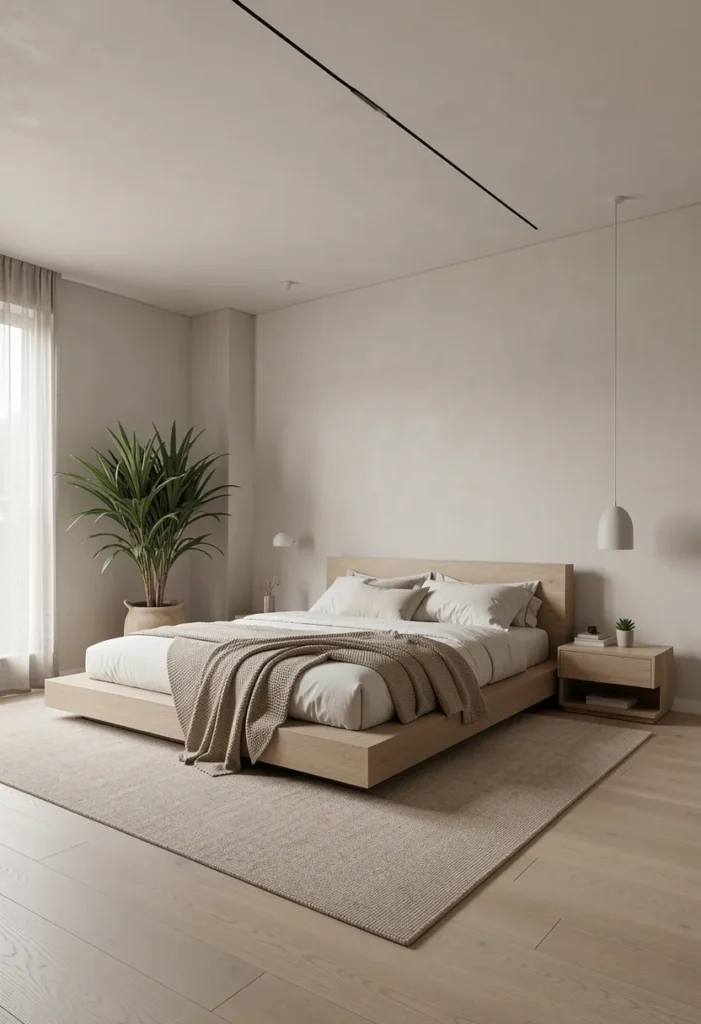
Low-profile furniture helps create the illusion of a larger and more open bedroom. Beds, dressers, and nightstands that sit closer to the ground keep the visual weight low, allowing the room to feel less crowded. This design approach emphasizes horizontal lines, which can make ceilings appear higher. Pair a low platform bed with simple, streamlined furniture to maintain a cohesive look.
3. Decluttered Surfaces and Hidden Storage
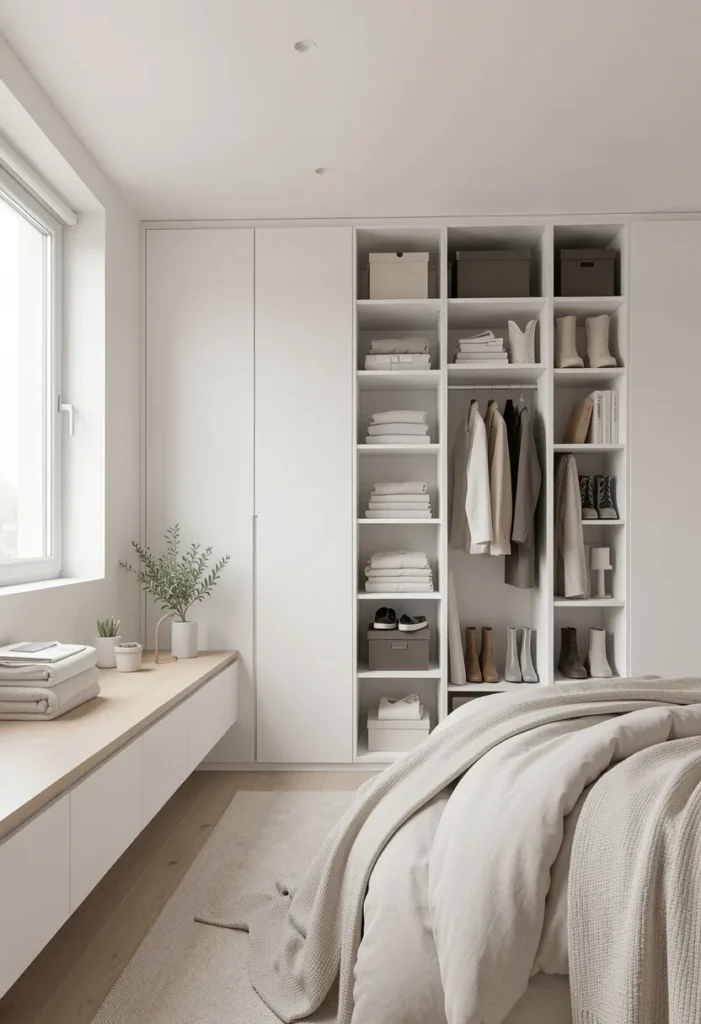
A clutter-free bedroom is essential for achieving a minimalist look. Keep surfaces like nightstands, dressers, and desks free of unnecessary items. Only display a few carefully chosen pieces. Hidden storage solutions, such as under-bed drawers or built-in cabinets, help keep belongings out of sight while maintaining organization. This approach ensures that the room feels tidy and serene.
See Also: 11 Bedroom LED Light Ideas Cool & Aesthetic Lighting Ideas
4. Simple Bedding with Soft Textures
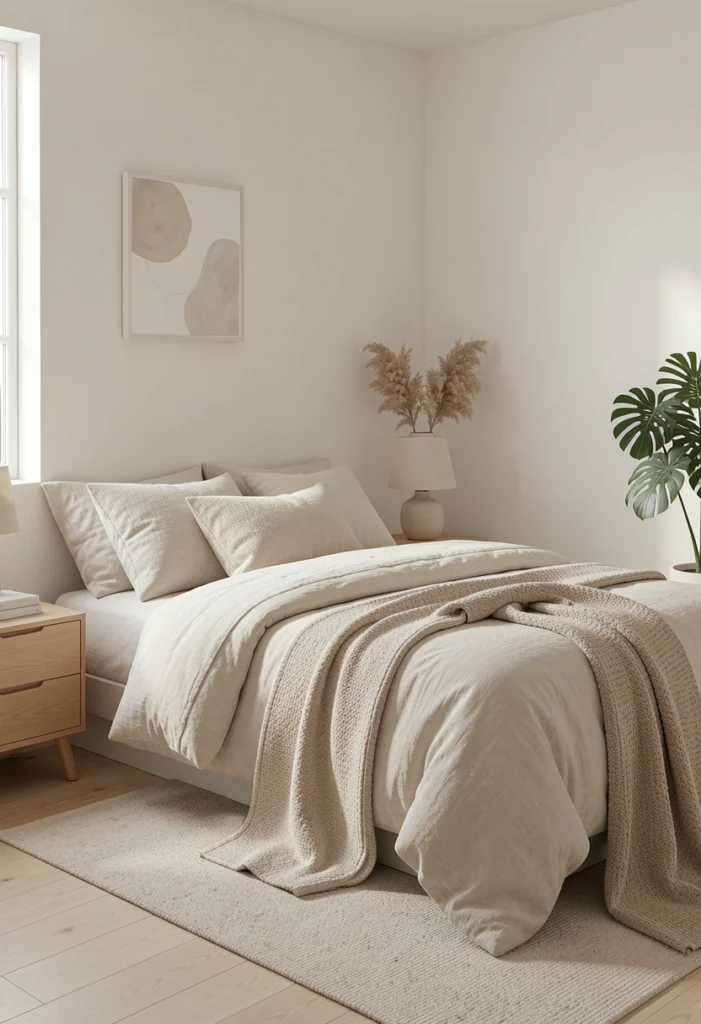
Minimalist bedding focuses on simplicity while maintaining comfort. Choose high-quality fabrics like cotton or linen in neutral tones for a clean and elegant look. Layering textures such as a soft throw or a few cushions adds warmth without creating clutter. Stick to a limited color palette to keep the design cohesive. Avoid overly decorative patterns or excessive pillows. Instead, focus on comfort and subtle detail.
5. Functional Furniture Only
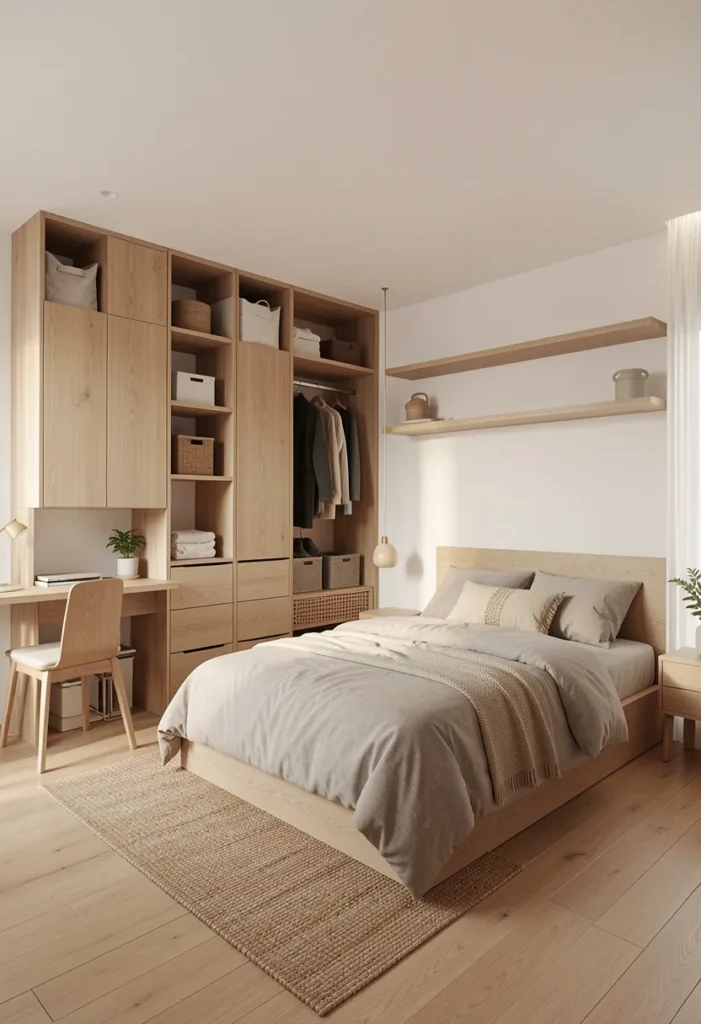
In a minimalist bedroom, every piece of furniture should have a clear purpose. Avoid unnecessary items and focus on functionality. For example, choose a bedside table with storage or a bed with built-in drawers. Multi-functional furniture helps maximize space while keeping the room organized. This approach reduces visual clutter and creates a more streamlined environment.
6. Natural Light as a Design Element
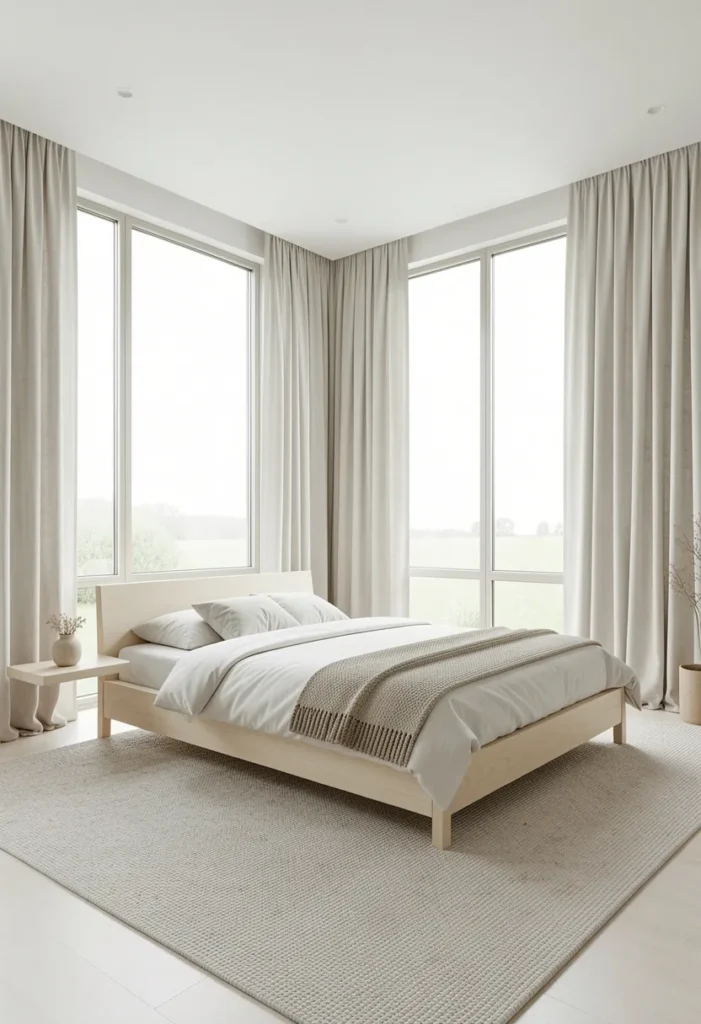
Natural light plays a key role in minimalist design. Large windows or sheer curtains allow sunlight to fill the room, creating a bright and airy atmosphere. Keep window treatments simple to maximize light flow. Mirrors can also help reflect light and make the space feel larger. Natural light enhances the simplicity of the room and contributes to a calm environment.
7. Minimal Wall Decor
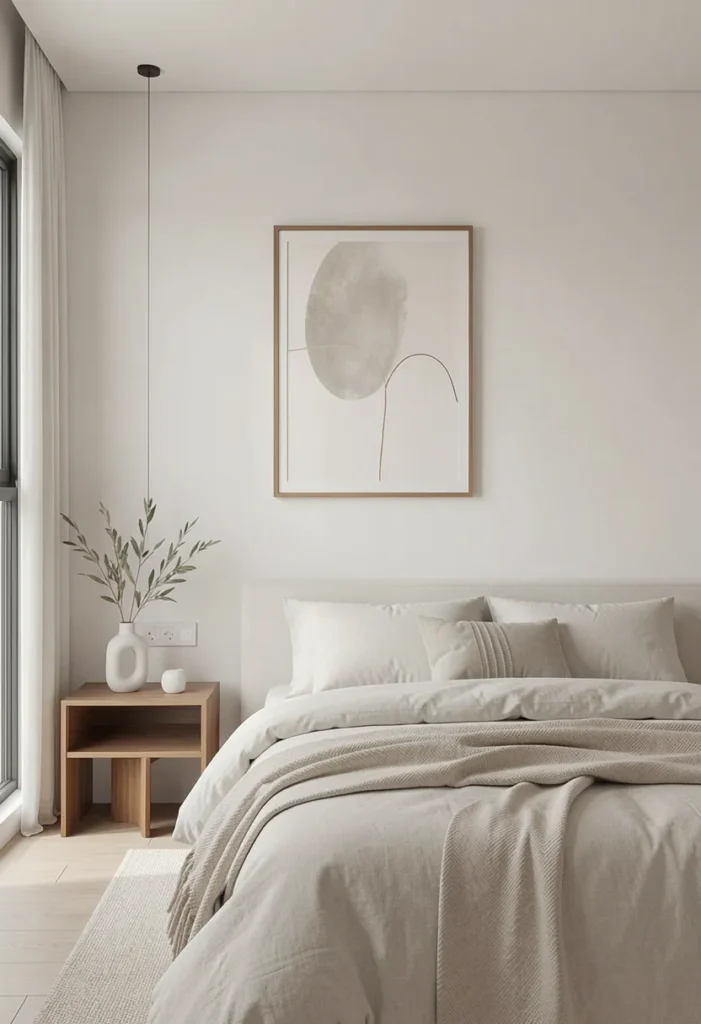
Wall decor in a minimalist bedroom should be simple and intentional. Choose one or two pieces of artwork that complement the overall design. Avoid overcrowding the walls. A single large piece or a small gallery with a cohesive theme works best. This approach keeps the room visually clean while adding a touch of personality.
8. Soft Ambient Lighting
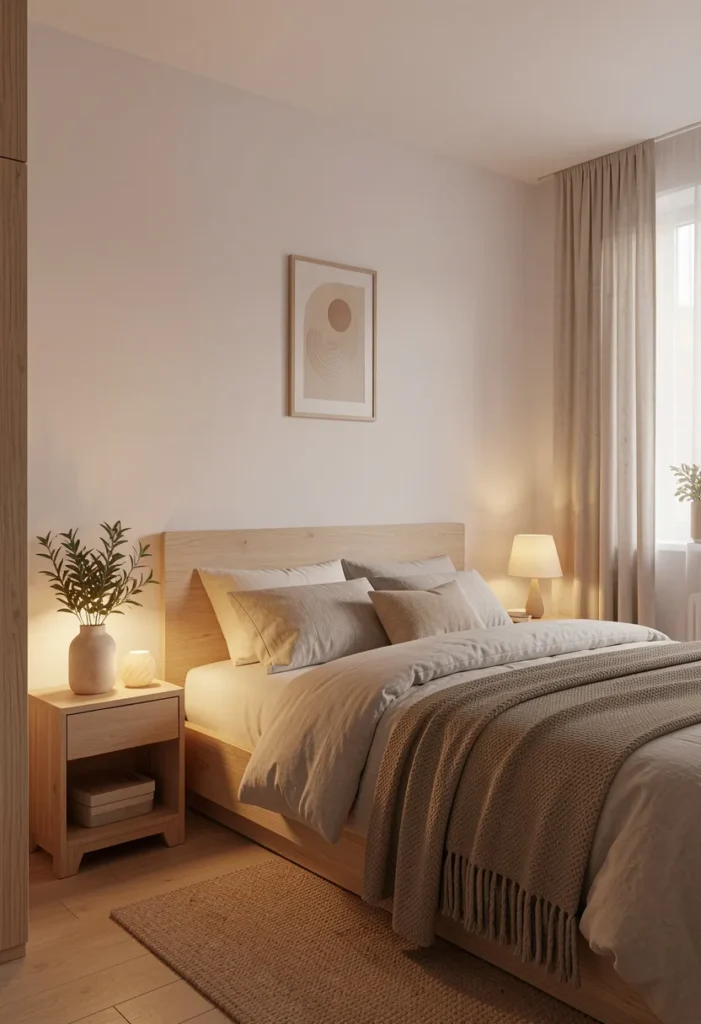
Lighting should be soft and subtle in a minimalist bedroom. Use warm-toned lights to create a cozy and relaxing atmosphere. Simple fixtures like table lamps or wall sconces work well without adding visual clutter. Layering lighting sources can add depth while maintaining simplicity.
9. Monochrome Design for Cohesion
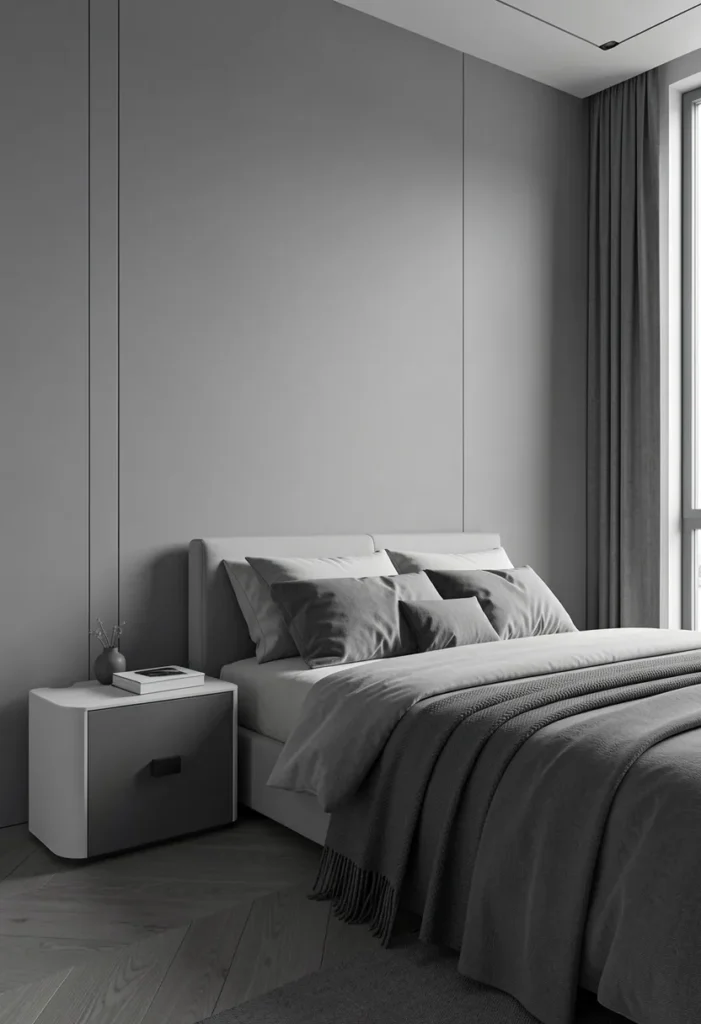
A monochrome color scheme uses different shades of a single color to create a cohesive look. This approach adds depth while maintaining simplicity. For example, use varying shades of gray or beige throughout the room. This creates a harmonious and balanced design.
10. Open Floor Space
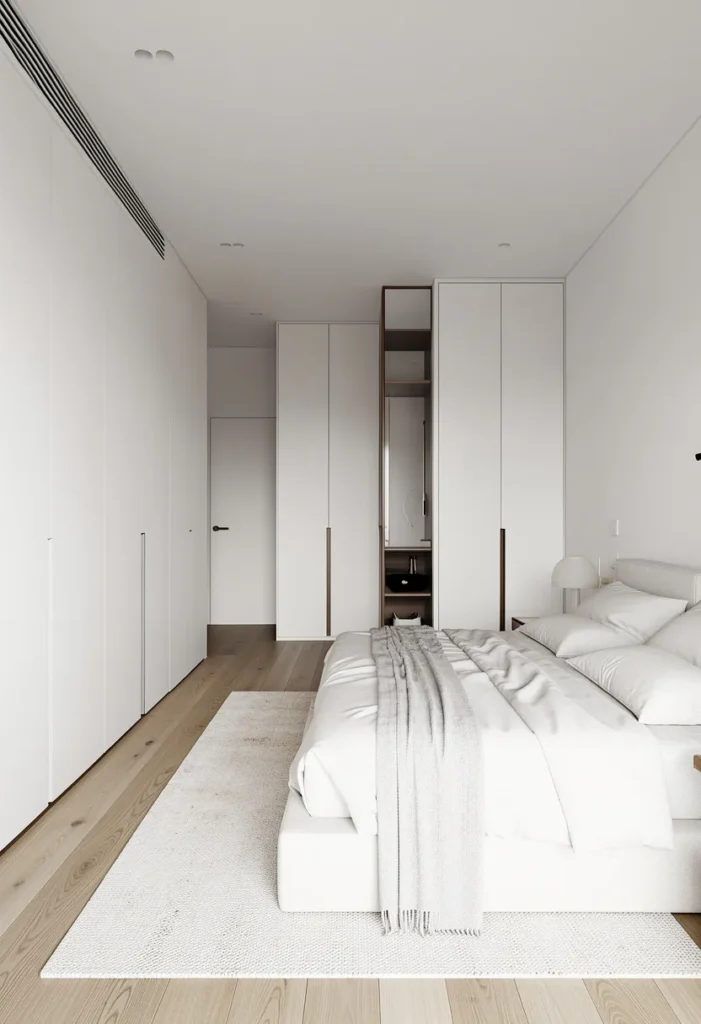
Keeping floor space clear is essential for a minimalist bedroom. Avoid overcrowding the room with furniture or decor. Open space creates a sense of freedom and makes the room feel larger. This approach enhances both functionality and aesthetics.
11. Built-In Storage Solutions
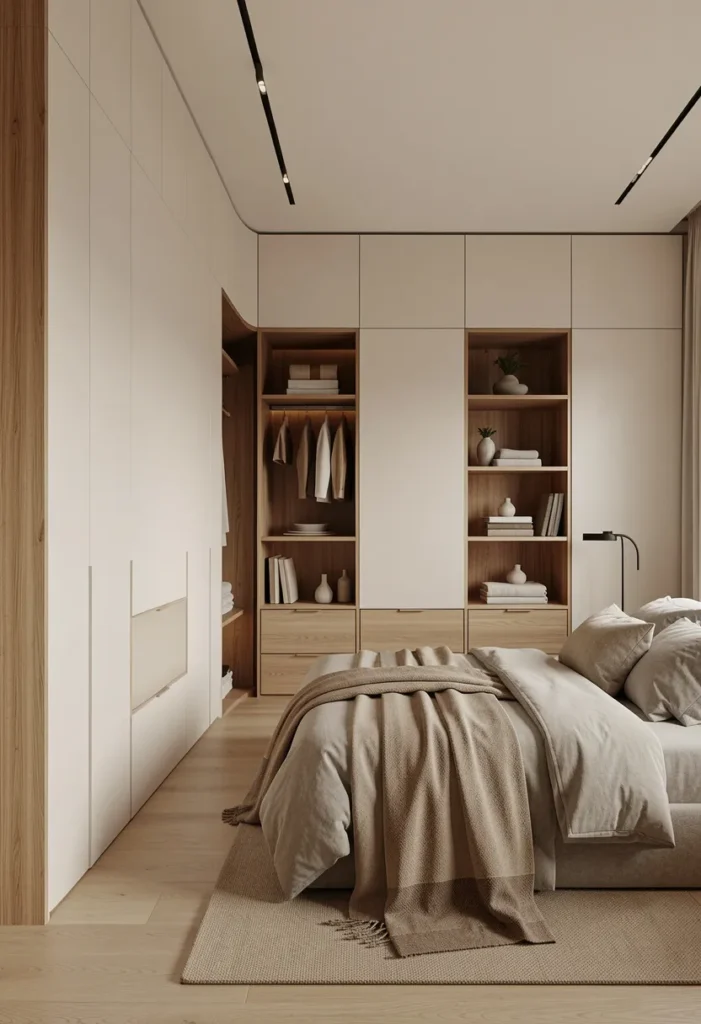
Built-in storage keeps the room organized while maintaining a sleek look. Custom cabinets or shelves blend seamlessly with the walls. This reduces clutter and maximizes space efficiency.
12. Subtle Textures for Warmth
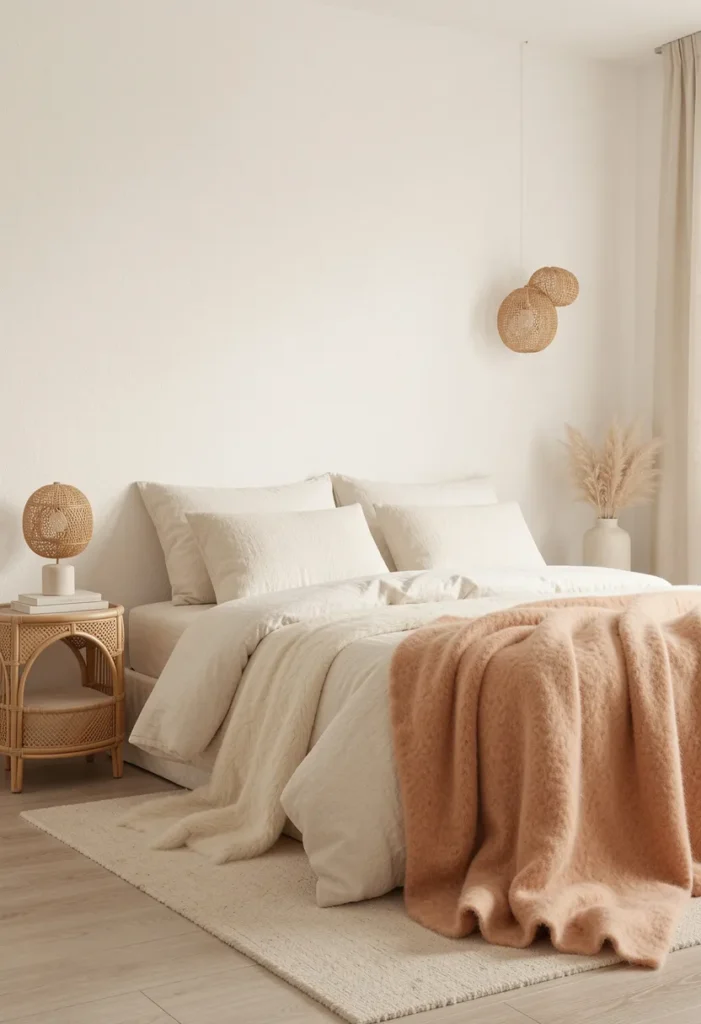
Adding subtle textures prevents a minimalist bedroom from feeling cold. Use materials like wood, linen, and wool. These elements add warmth while maintaining simplicity.
13. Indoor Plants for a Natural Touch
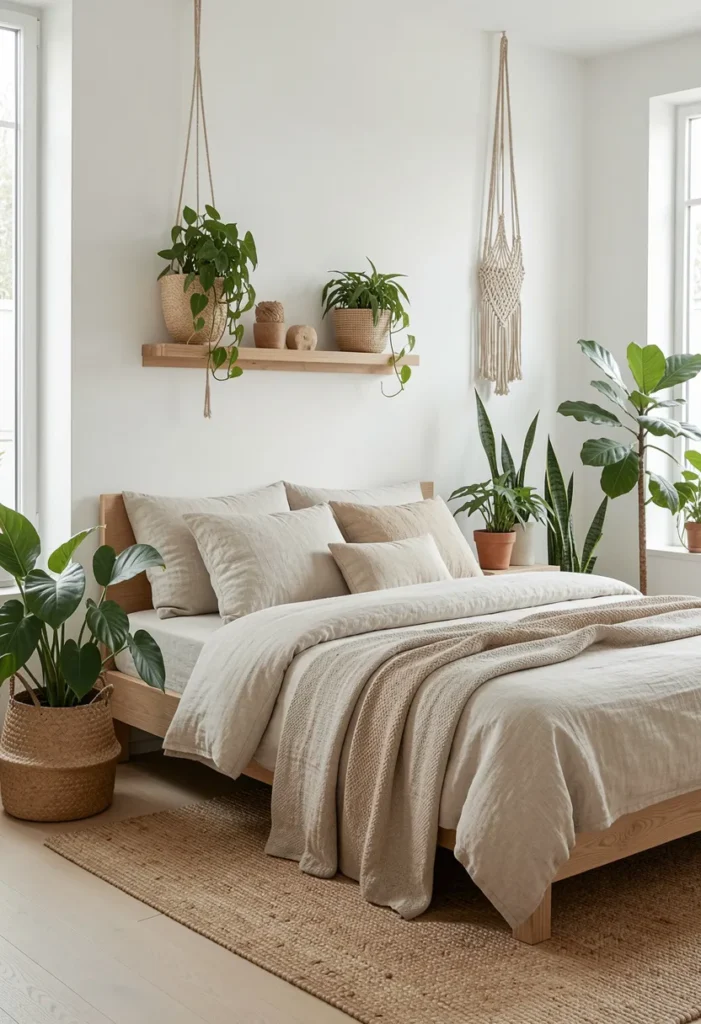
A few indoor plants can add life and freshness to a minimalist bedroom. Choose simple, low-maintenance plants. They enhance the space without adding clutter.
14. Keep Decor Intentional and Limited
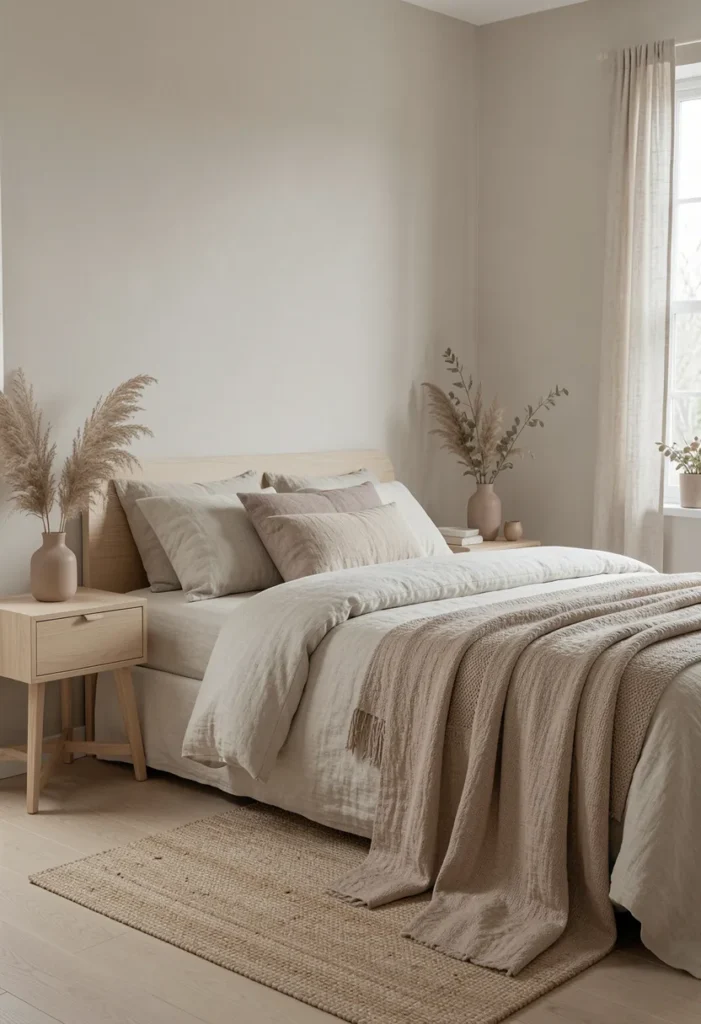
Minimalist decor should be intentional and meaningful. Choose a few items that reflect your personality. Avoid over-decorating to maintain a clean and peaceful environment.
Final Words
A minimalist bedroom is all about creating a peaceful retreat where simplicity and functionality come together effortlessly. By focusing on clean lines, neutral tones, and intentional design choices, you can transform your space into a calm and clutter-free environment that promotes relaxation and better sleep. The beauty of minimalism lies in its ability to make even the smallest rooms feel open, organized, and inviting.