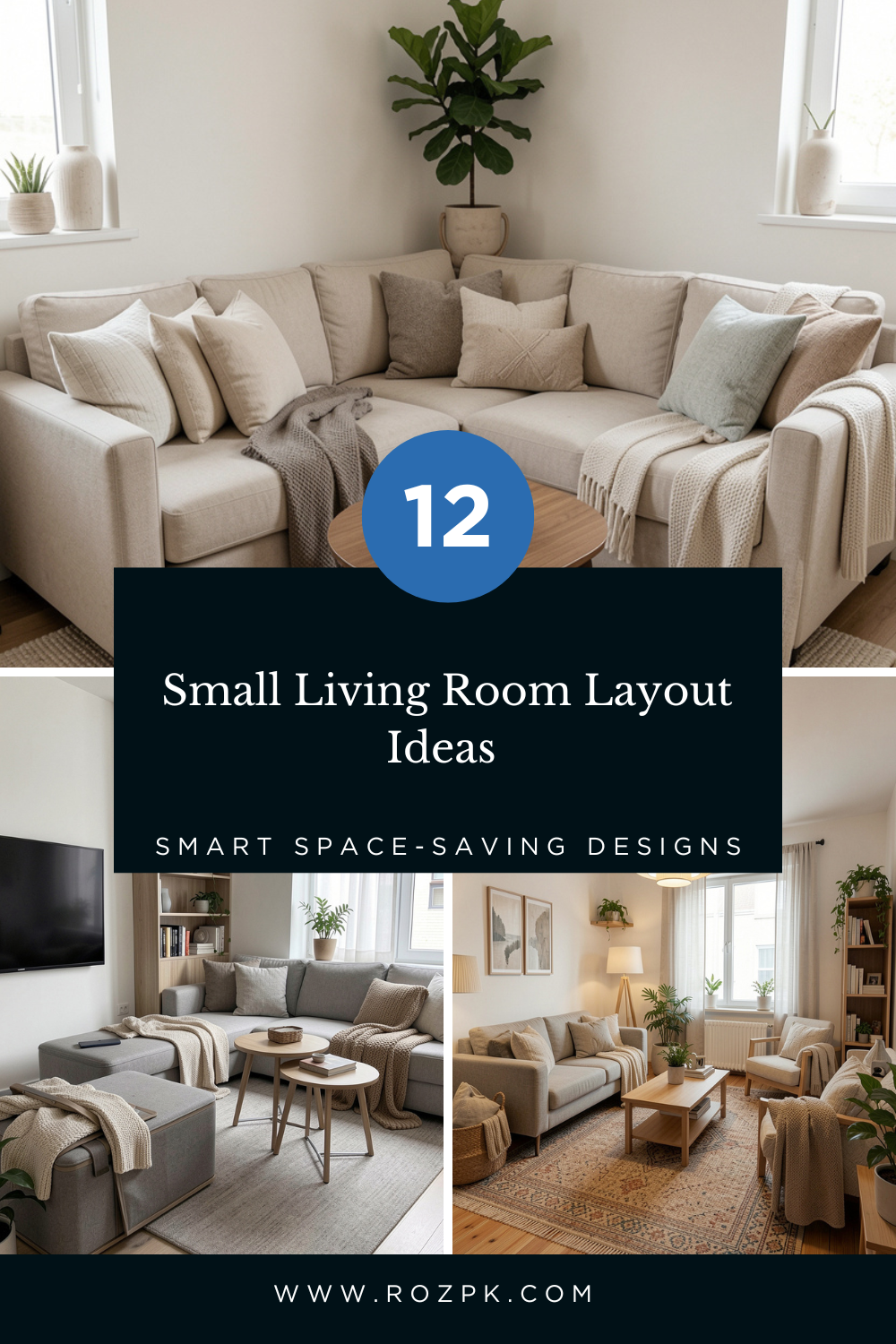
12 Small Living Room Layout Ideas Smart Space-Saving Designs
Designing a small living room can feel challenging, but with the right layout strategies, even the most compact spaces can become stylish, functional, and comfortable. The key lies in making smart design choices that maximize every inch without sacrificing aesthetics. From clever furniture placement to multi-functional pieces, small living rooms offer endless opportunities for creativity and efficiency.
Whether you’re working with a studio apartment or a cozy home, thoughtful layouts can open up the space, improve flow, and create a welcoming atmosphere. In this guide, you’ll discover 12 small living room layout ideas that focus on smart space-saving designs. Each idea is tailored to help you optimize your layout, enhance visual openness, and create a balanced environment that feels both practical and beautifully put together.
1. Floating Furniture Layout for Better Flow
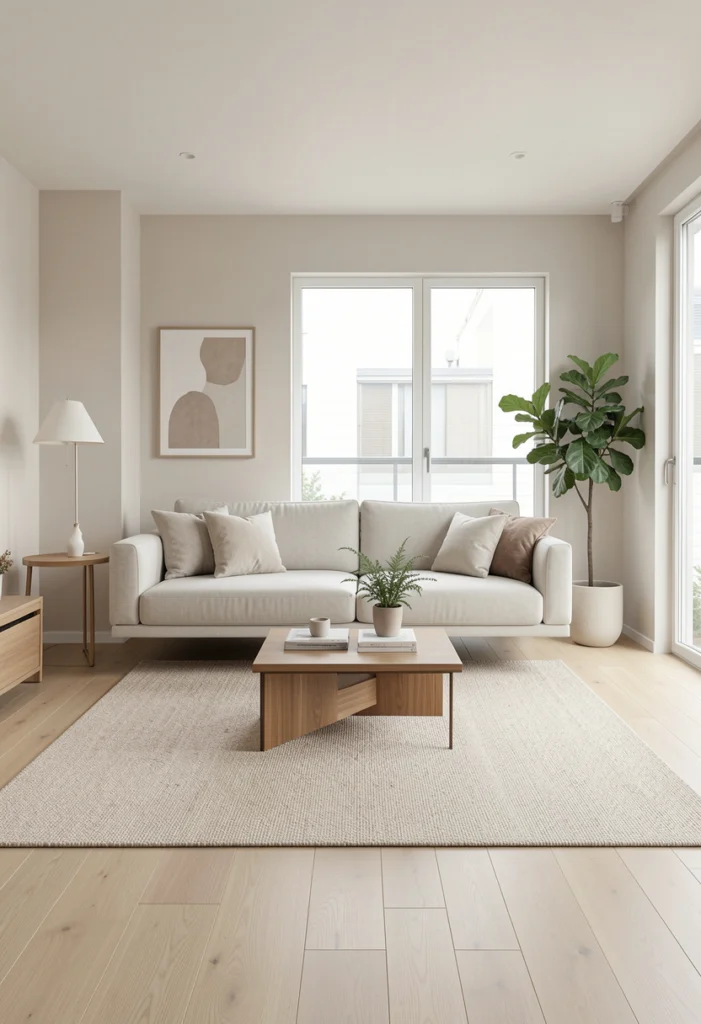
Floating furniture is one of the smartest ways to make a small living room feel larger. Instead of pushing all furniture against the walls, bring key pieces like your sofa slightly inward to create a more intentional and balanced layout. This approach allows for better traffic flow and makes the room feel more open and inviting.
By leaving a small gap between the furniture and the walls, you create the illusion of depth, which visually expands the space. Pair this with a central rug to anchor the layout and define the seating area. A slim console table behind the sofa can also add functionality without crowding the room.
2. Wall-Mounted Storage Solutions
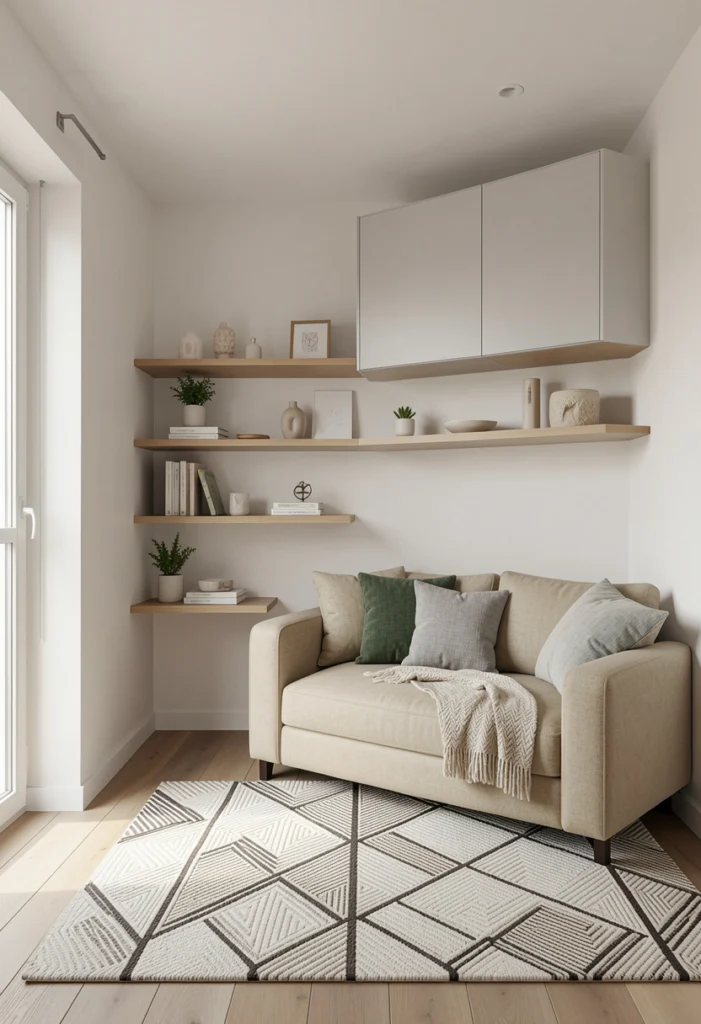
Maximizing wall space is essential in a small living room. Wall-mounted shelves, cabinets, and media units free up valuable floor space while keeping the room organized and clutter-free. This approach allows you to store and display items without overwhelming the layout.
Choose sleek, minimal designs that blend seamlessly with your walls to maintain a clean aesthetic. Floating shelves can be used for books, decor, or plants, while wall-mounted cabinets can hide clutter. Keeping the floor clear makes the room feel larger and more breathable. It also creates a streamlined look that enhances the overall design.
3. Multi-Functional Furniture Arrangement
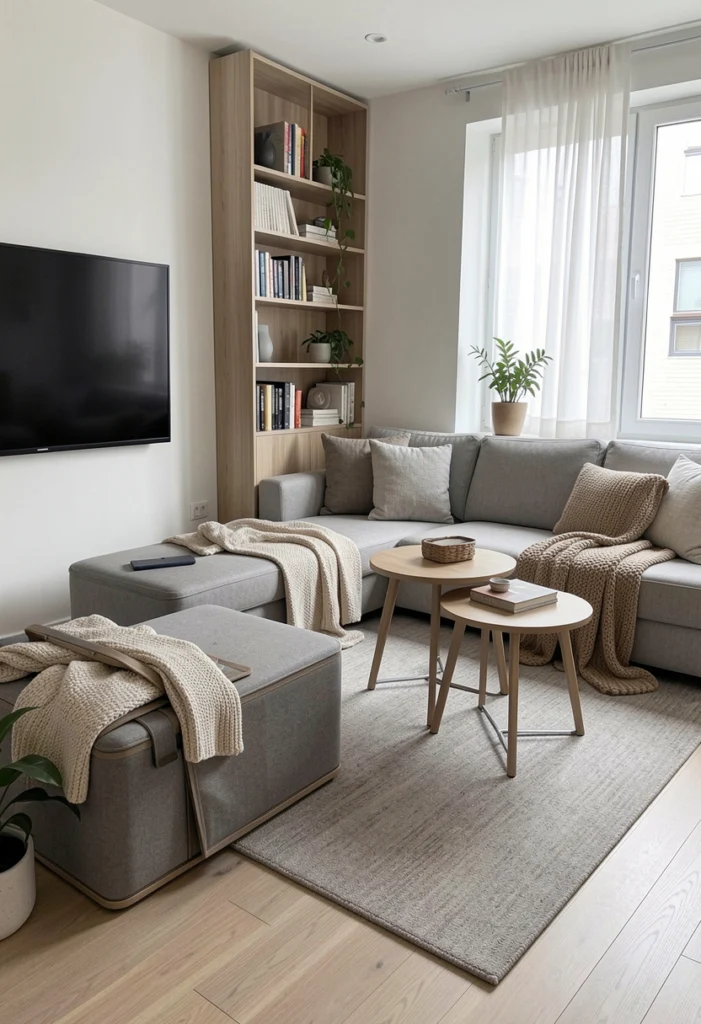
In a small living room, every piece of furniture should serve more than one purpose. Multi-functional furniture, such as sofa beds, storage ottomans, and nesting tables, helps maximize utility without adding bulk.
Arrange these pieces strategically to ensure easy access and flexibility. For example, a storage ottoman can double as a coffee table, extra seating, or hidden storage. Nesting tables can be expanded when needed and tucked away to save space.
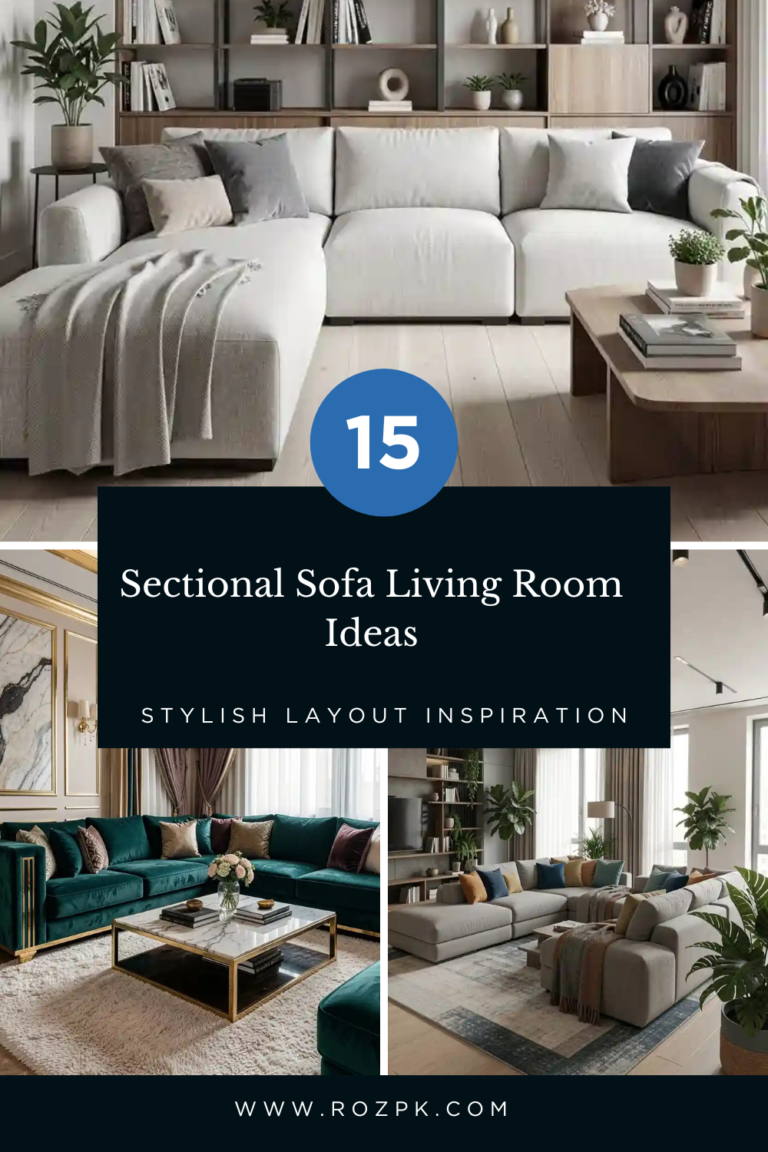
4. Corner Sofa Space Optimization
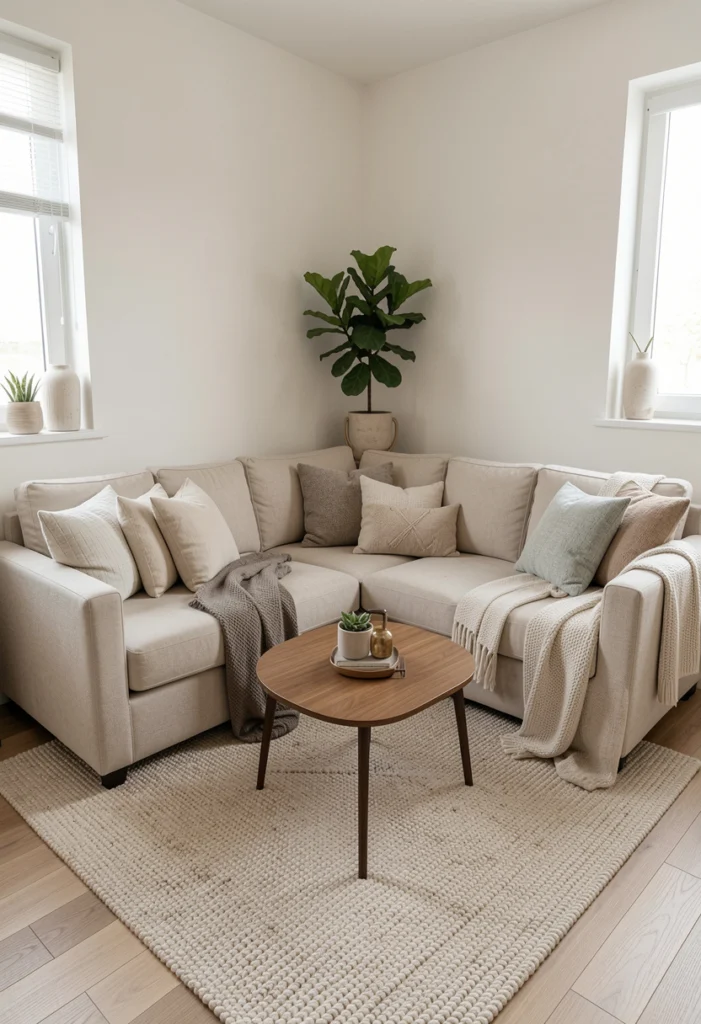
A corner sofa is perfect for making the most of limited space. It utilizes often-unused corners while providing ample seating without overcrowding the room.
Position the sofa to define the seating area and pair it with a compact coffee table. This creates a cozy and functional layout that maximizes every inch. Choose a light-colored or low-profile design to keep the space feeling open. This layout is ideal for small apartments and family rooms.
5. Vertical Design to Maximize Height
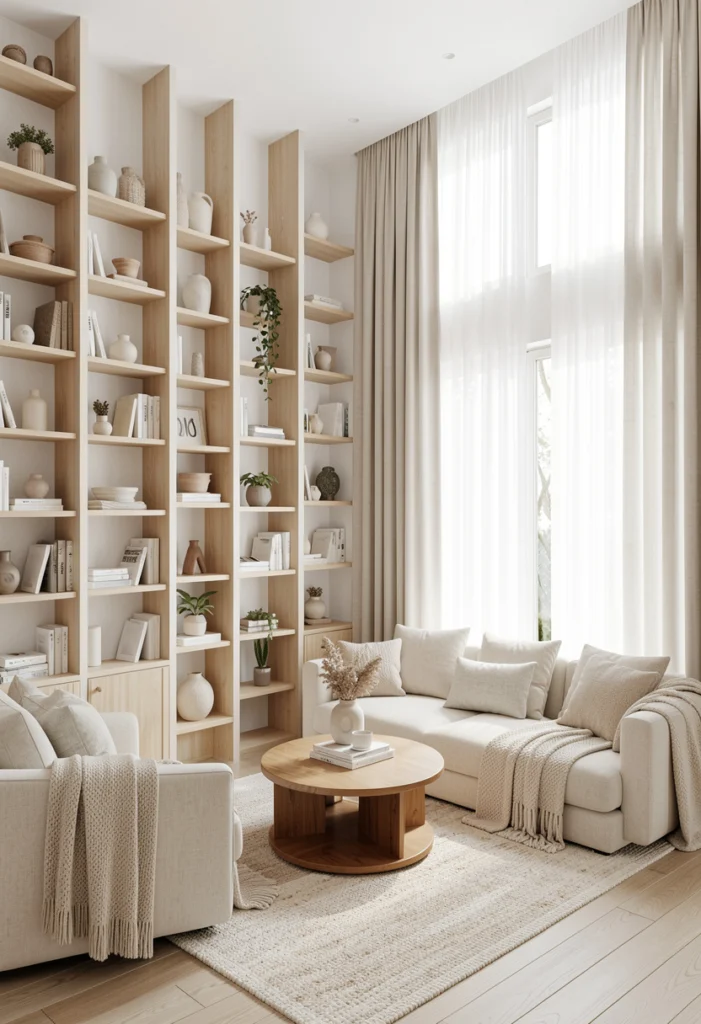
When floor space is limited, think vertically. Tall shelving units, floor-to-ceiling curtains, and vertical decor elements draw the eye upward, making the room feel taller and more spacious.
Use vertical storage to keep items organized while maintaining a clean layout. This approach not only saves space but also adds visual interest. Vertical design is especially effective in rooms with higher ceilings, enhancing the sense of openness.
See Also: 13 Corner Fireplace Living Room Ideas Cozy Layout Inspiration
6. Minimalist Layout for Visual Space
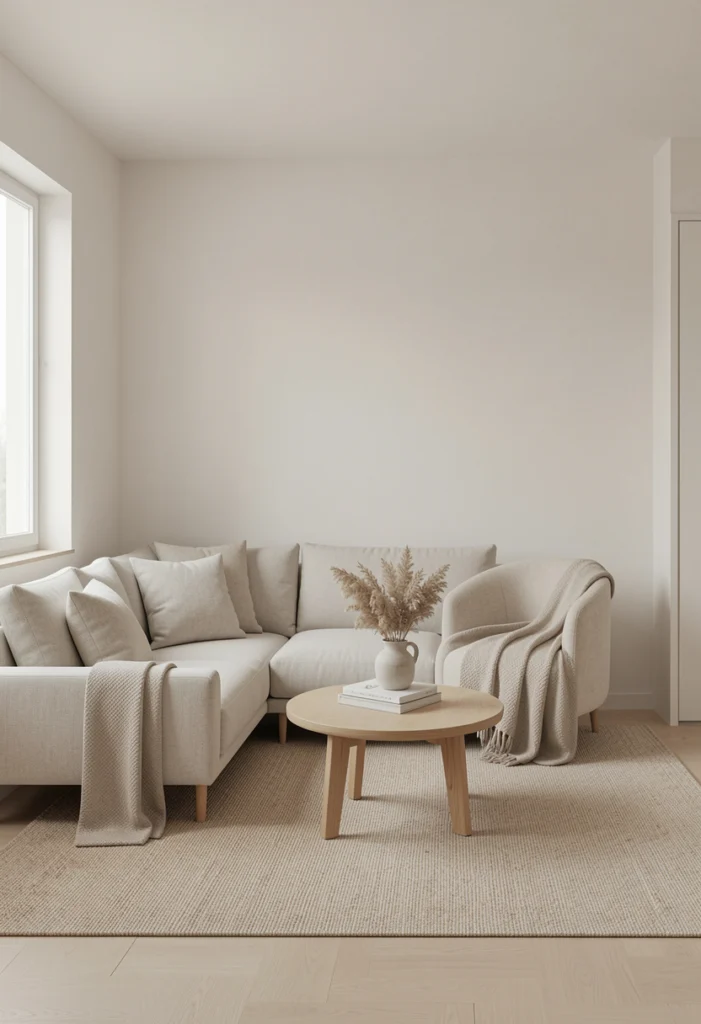
A minimalist layout is one of the most effective ways to make a small living room feel larger. By reducing clutter and focusing on essential pieces, you create a clean and open environment.
Choose simple furniture with clean lines and stick to a neutral color palette. Avoid overcrowding the space with unnecessary decor. This approach enhances visual clarity and makes the room feel calm and organized.
7. Open Plan Integration
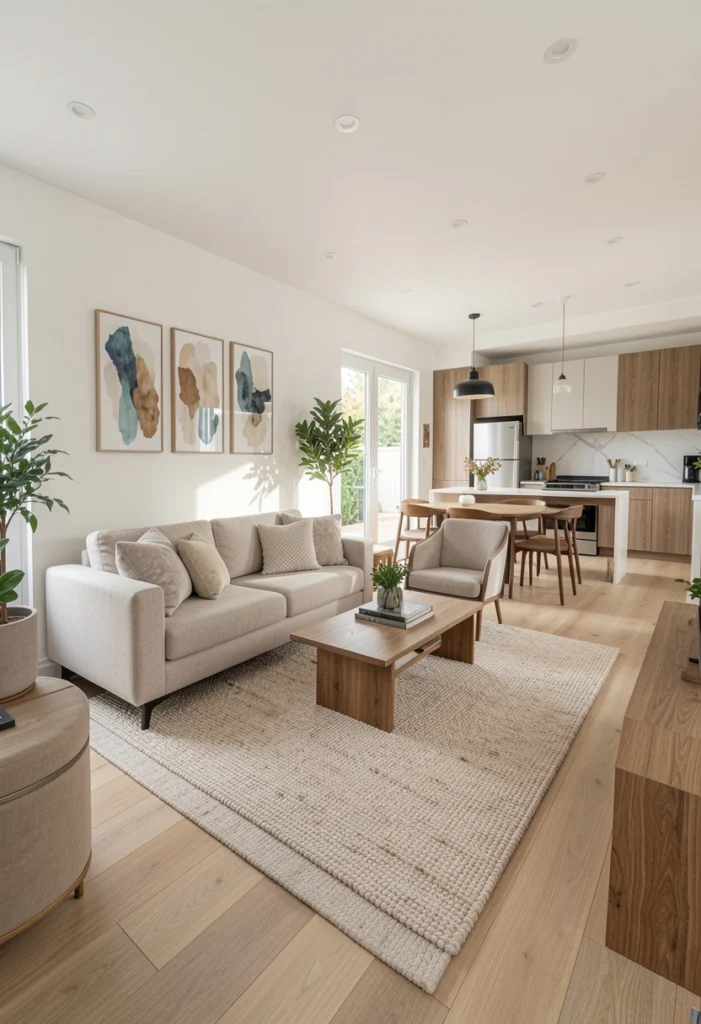
If your living room is part of an open-plan layout, use furniture placement to define the space. Position your sofa to act as a divider between the living and dining areas.
This creates a sense of structure without the need for walls. Rugs and lighting can further define zones within the space. Open-plan integration makes the room feel larger and more connected.
8. Symmetrical Small Space Layout
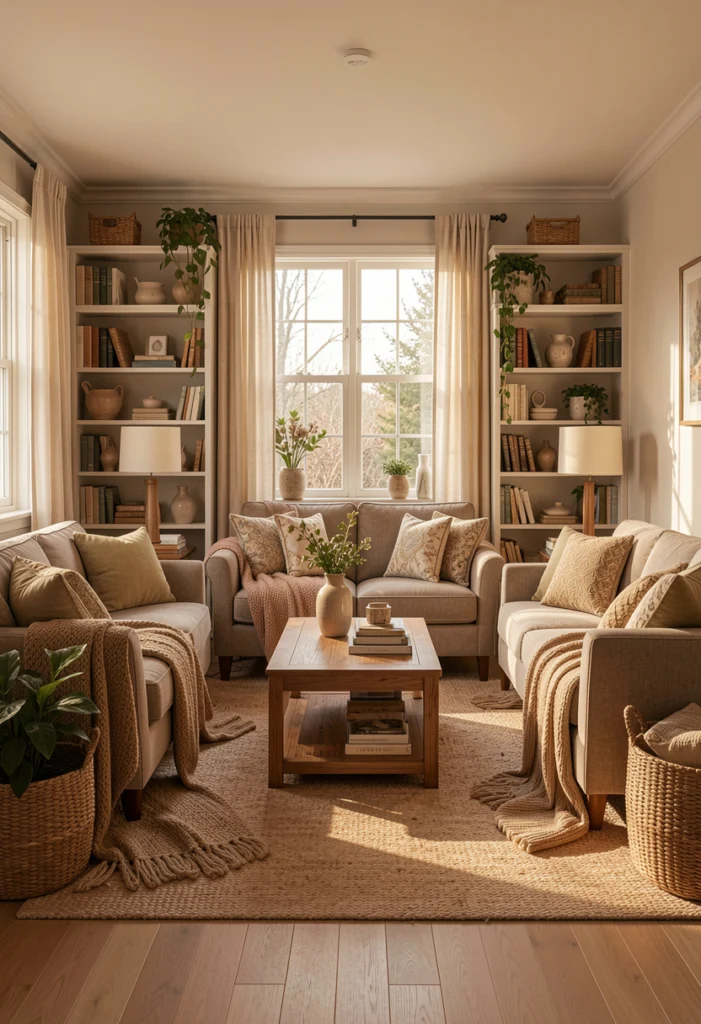
Symmetry can bring balance and order to a small living room. Arrange furniture and decor in pairs to create a cohesive and visually pleasing layout.
For example, place two chairs opposite a sofa or use matching side tables and lamps. This approach makes the space feel more organized and intentional. Symmetry works well in compact spaces where visual harmony is key.
9. Window-Focused Arrangement
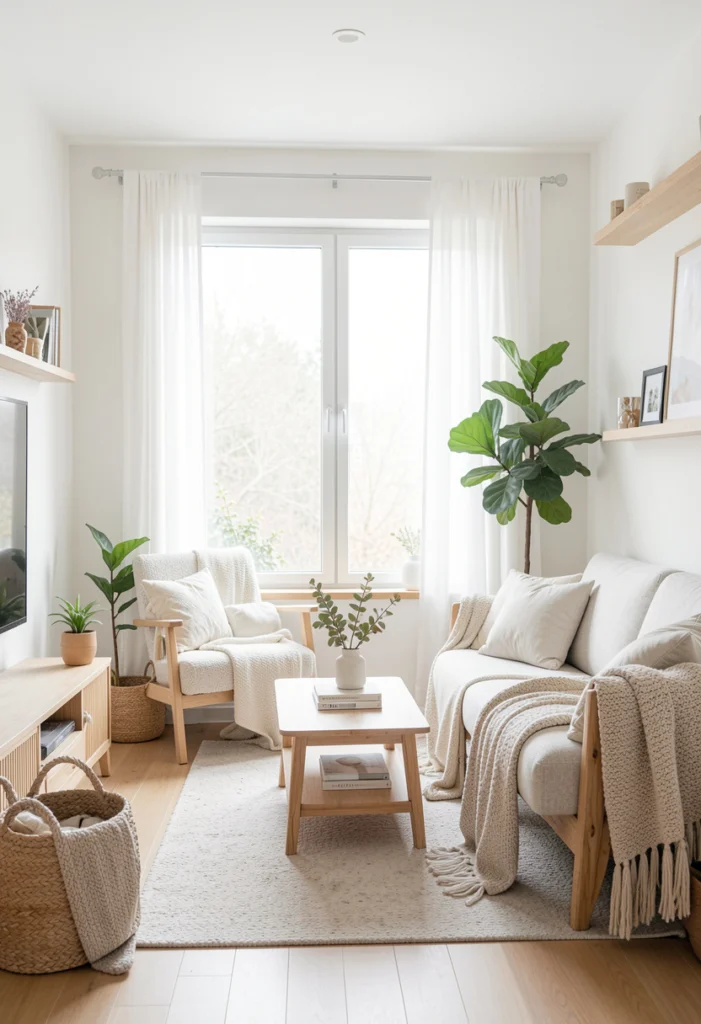
Centering your layout around a window can enhance natural light and make the room feel brighter and larger. Position seating to face or frame the window, creating a focal point.
This approach maximizes light and connects the indoor space with the outdoors. Use light curtains to maintain openness. A window-focused layout adds both function and beauty to the room.
10. Compact Sectional Layout
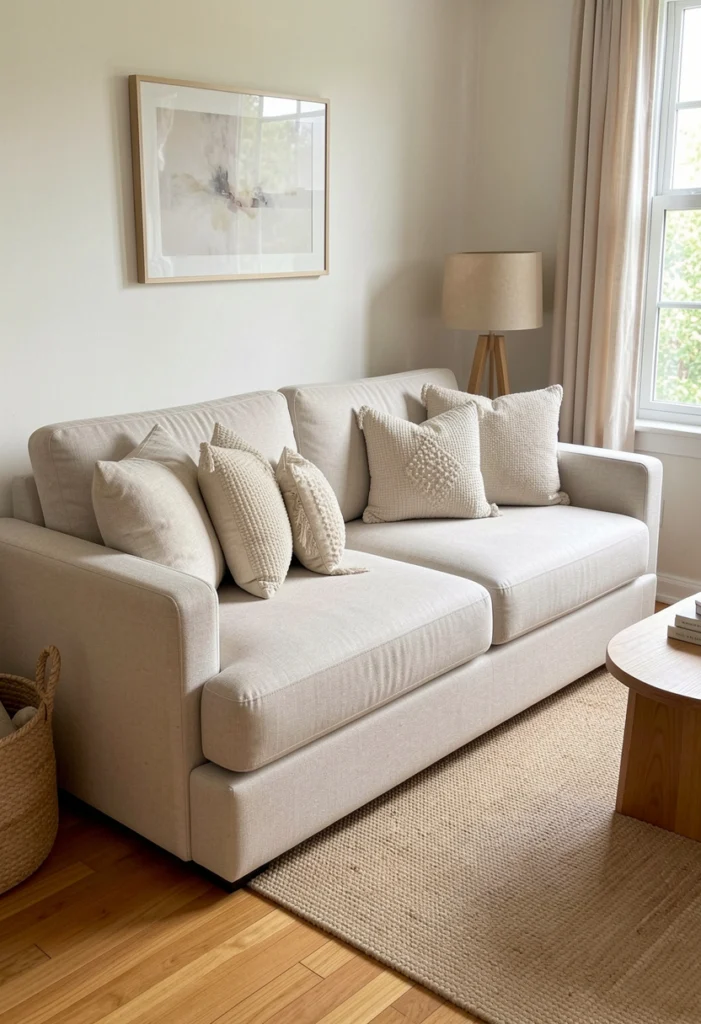
A compact sectional sofa can provide ample seating without taking up too much space. Choose a design that fits the room’s dimensions and arrange it to maximize flow.
Pair it with a small coffee table or ottoman to maintain balance. This layout is perfect for small families or entertaining guests. Compact sectionals offer both comfort and efficiency.
11. Hidden Storage Design
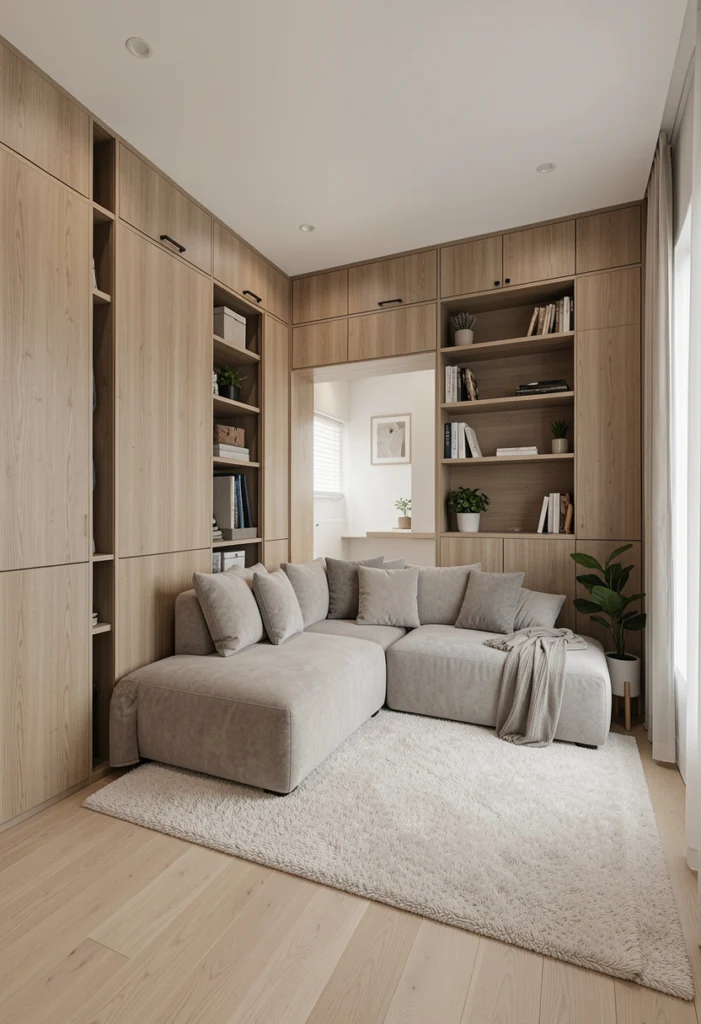
Hidden storage solutions help keep a small living room organized and clutter-free. Choose furniture with built-in storage, such as coffee tables, benches, or sofas.
This allows you to store items out of sight while maintaining a clean aesthetic. Hidden storage is essential for maximizing space. It keeps the room functional without compromising style.
12. Zoning with Rugs and Lighting
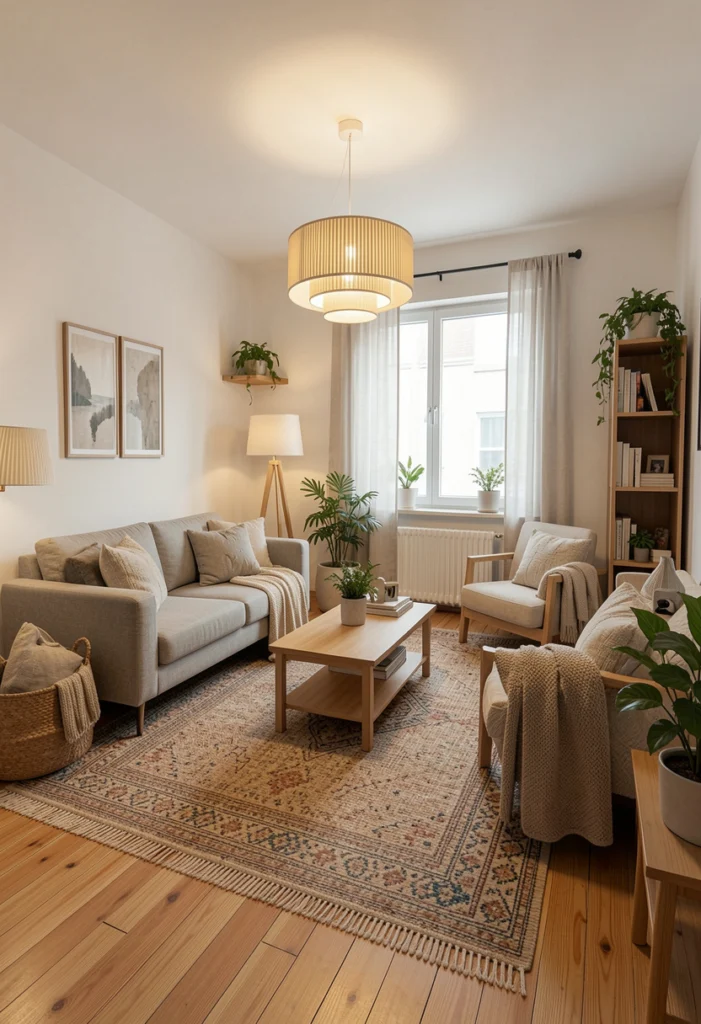
Zoning helps define different areas within a small living room. Use rugs to anchor seating areas and lighting to highlight specific zones.
This creates a sense of structure and organization, even in compact spaces. Layered lighting adds depth and enhances ambiance. Zoning makes the room feel more functional and visually appealing.
Final Words
Designing a small living room doesn’t mean compromising on style or comfort it simply requires smarter choices and a more intentional approach. By focusing on efficient layouts, multi-functional furniture, and thoughtful design elements, you can transform even the smallest space into a beautiful and highly functional living area. Each idea you’ve explored shows that with the right arrangement, your room can feel open, organized, and inviting.