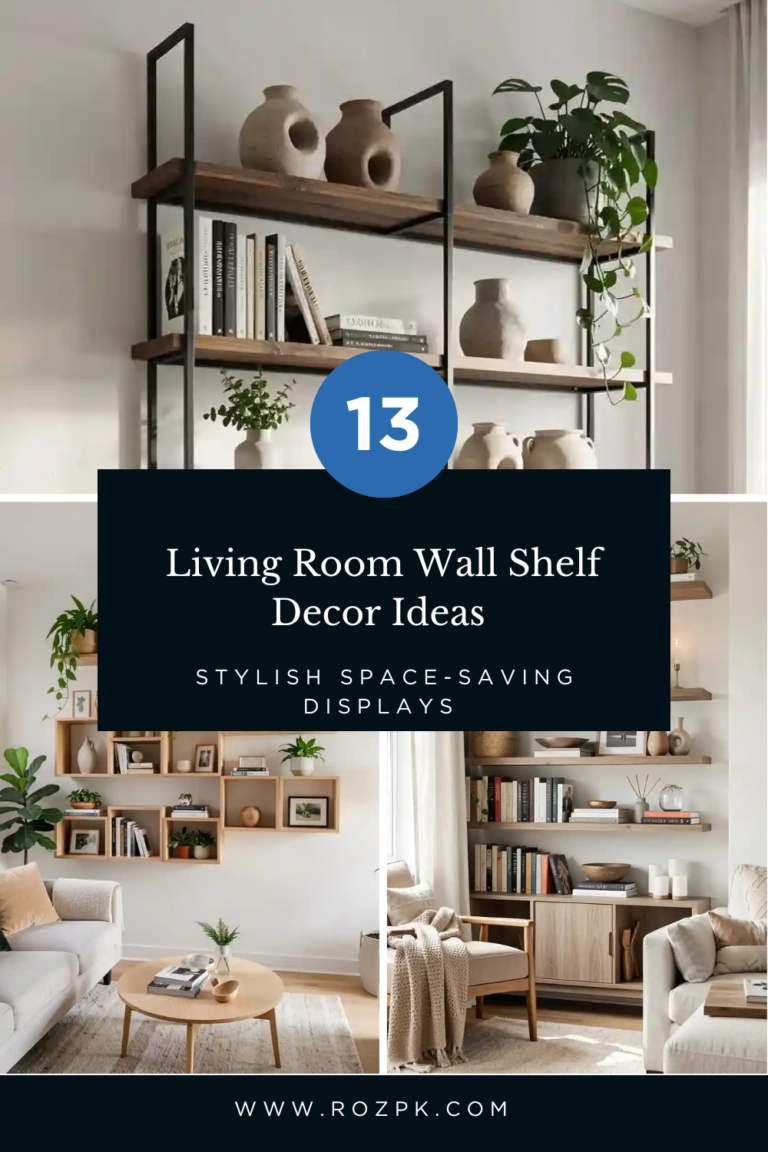
14 Japandi Living Room Ideas Minimalist Zen Interior Inspiration
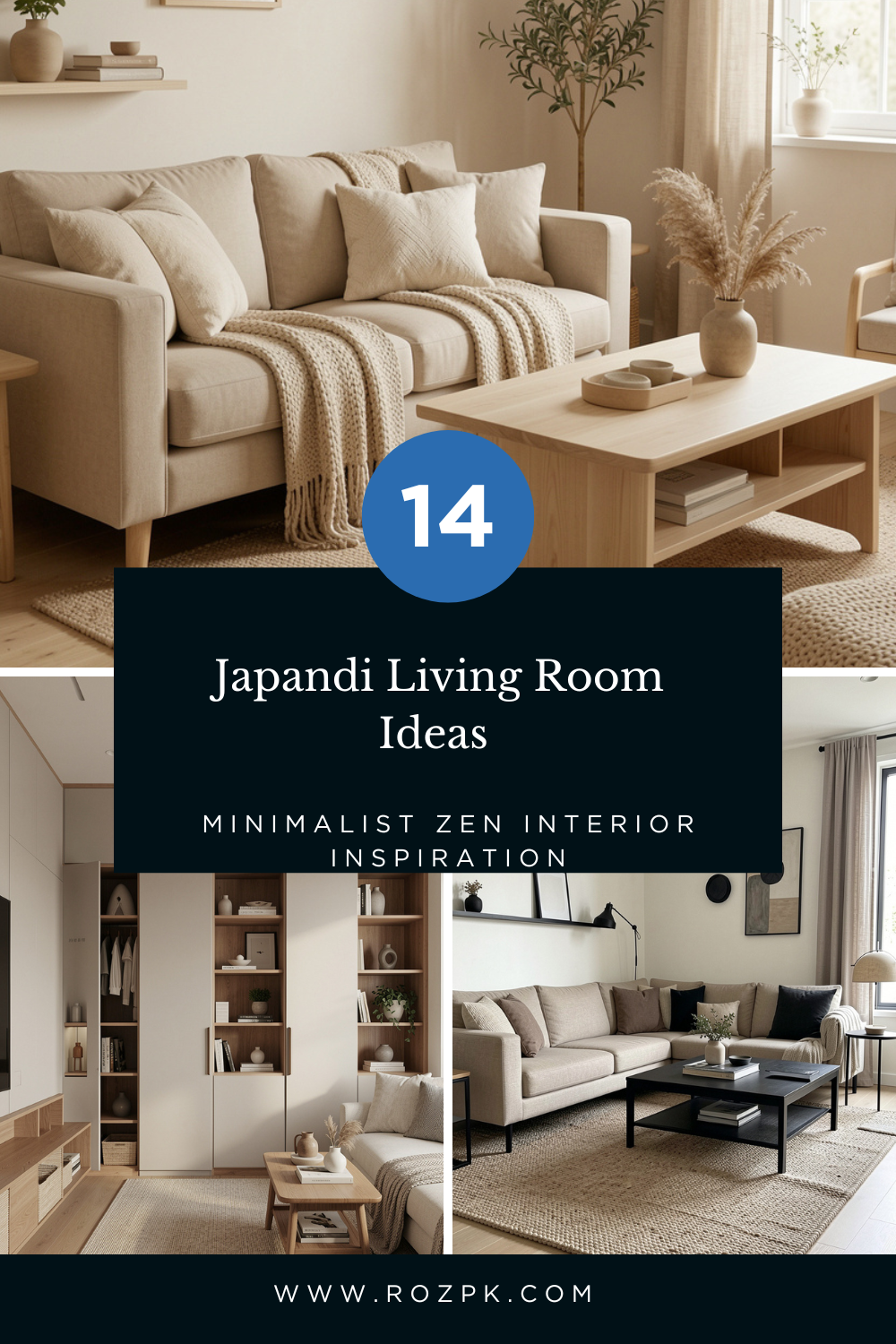
Japandi design blends the calm simplicity of Japanese aesthetics with the warmth and functionality of Scandinavian interiors, creating spaces that feel both minimal and inviting. This hybrid style focuses on clean lines, natural materials, muted color palettes, and intentional living making it perfect for a peaceful, clutter-free living room. If you’re looking to transform your space into a serene retreat, Japandi design offers timeless inspiration that balances beauty and practicality.
From low-profile furniture to organic textures and soft lighting, every element serves a purpose while contributing to a cohesive, tranquil atmosphere. In this guide, you’ll discover 14 Japandi living room ideas that embody minimalist Zen interior inspiration. Each idea is designed to help you create a harmonious environment that feels grounded, stylish, and effortlessly comfortable ideal for modern living with a mindful approach to design and décor.
1. Neutral Color Palette with Warm Undertones
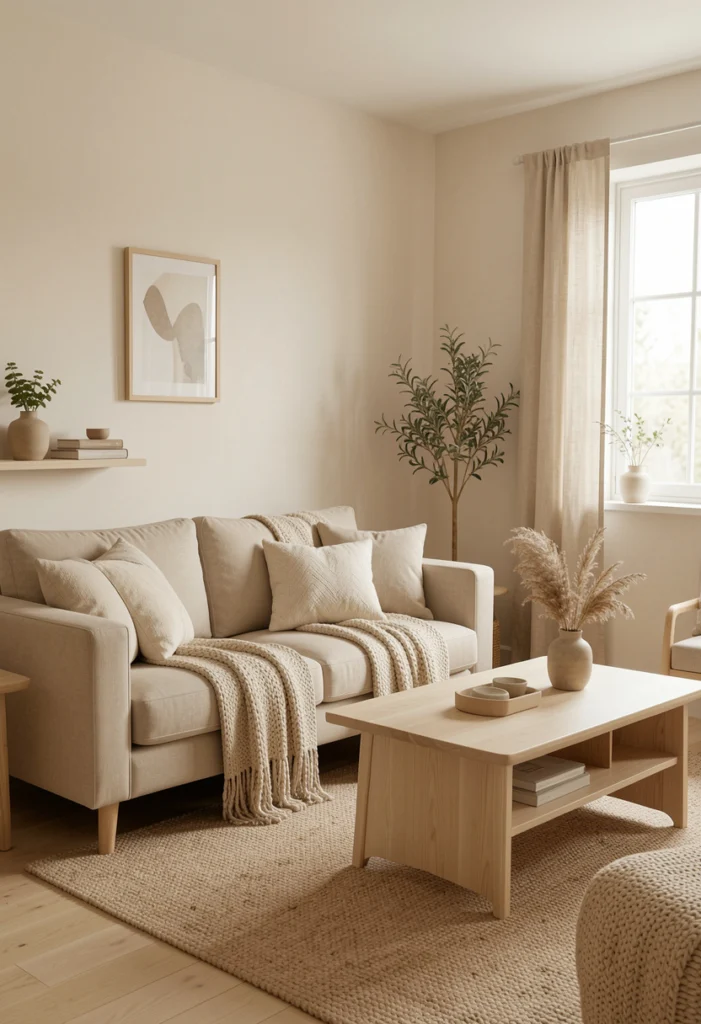
A Japandi living room begins with a calm and cohesive color palette. Think soft whites, warm beiges, light taupes, and muted greys layered together to create a soothing visual flow. Unlike stark minimalism, Japandi leans toward warmer tones that feel inviting rather than cold. This palette helps reflect natural light and makes the space feel airy and peaceful.
To elevate the look, incorporate subtle tonal variations instead of bold contrasts. For example, pair creamy walls with slightly darker linen upholstery and pale wood flooring. The goal is to create depth without overwhelming the senses. Avoid overly bright colors; instead, opt for earthy hues that mimic nature.
2. Low-Profile Furniture for a Grounded Look
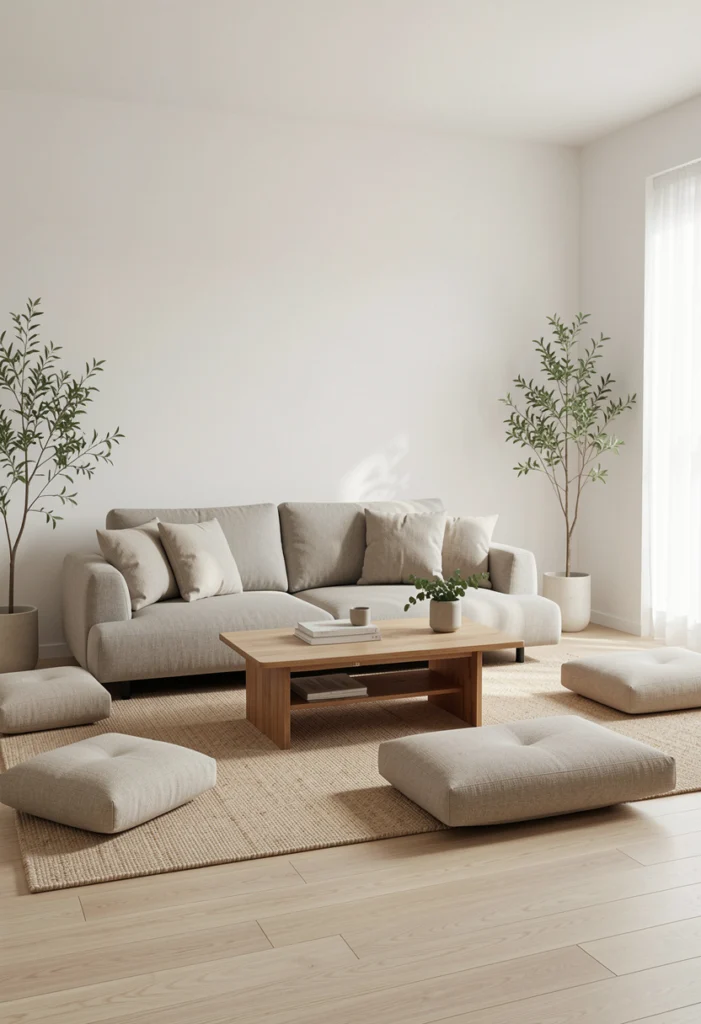
Low-profile furniture is a signature element of Japandi interiors, inspired by traditional Japanese living. Sofas, coffee tables, and seating arrangements are kept closer to the ground, creating a sense of stability and connection to the space. This design choice instantly makes the room feel more relaxed and grounded.
Choose sleek, simple furniture with clean lines and avoid bulky or ornate designs. A low sofa with slim wooden legs paired with a minimal coffee table works perfectly. The lower height also enhances the visual openness of the room, making ceilings appear taller and spaces feel larger.
See Also: 12 Built In Shelves Living Room Ideas Smart Storage & Style
3. Natural Wood Elements for Organic Warmth
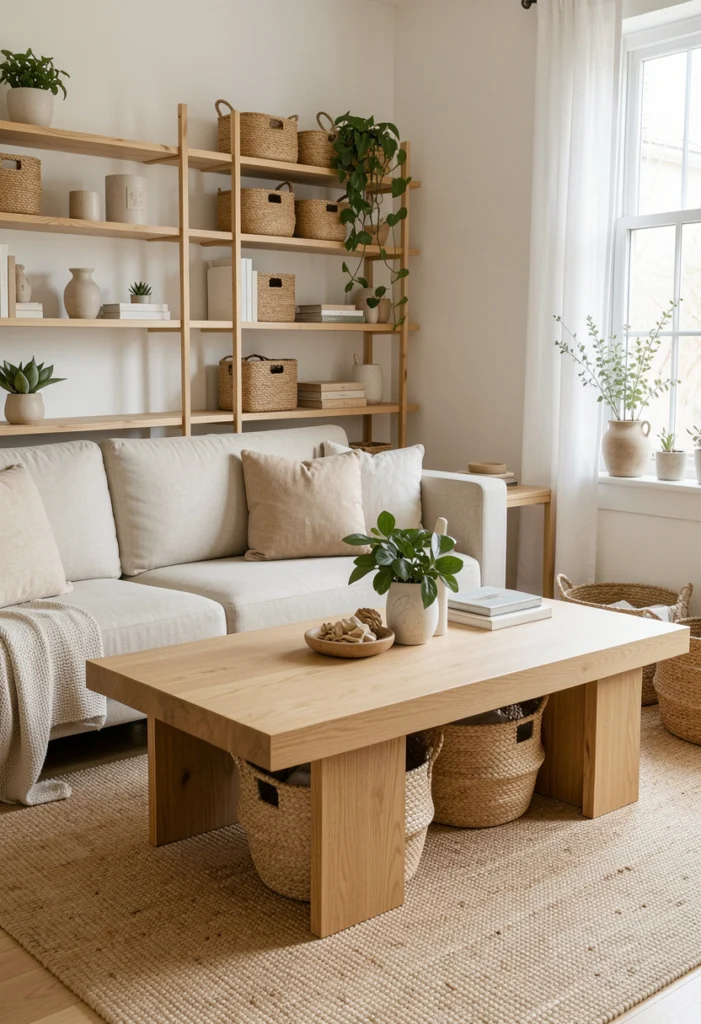
Wood is essential in Japandi design, bringing warmth and authenticity into the living room. Light-toned woods like oak, ash, and beech are commonly used to maintain a bright and airy feel, while darker woods can add subtle contrast.
Incorporate wood through furniture, flooring, wall panels, or even ceiling beams. The key is to keep finishes natural and avoid excessive gloss. Matte or lightly treated wood enhances the organic quality of the space.
4. Minimalist Decor with Purpose
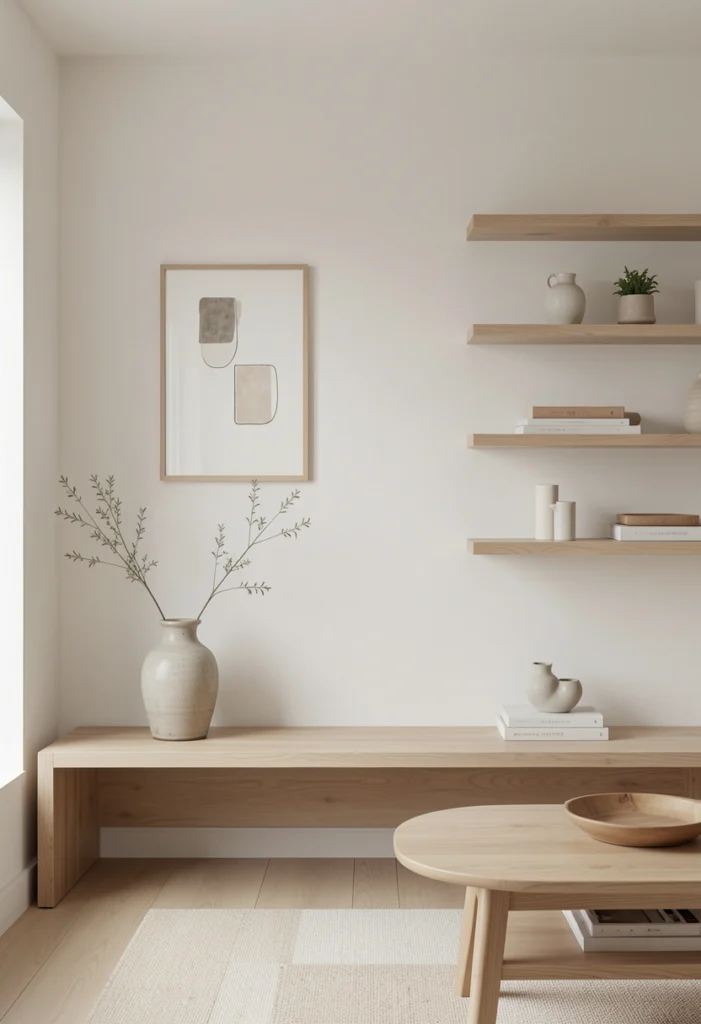
Japandi interiors embrace the “less is more” philosophy, but every piece included should have meaning or function. Instead of filling shelves with random items, carefully select a few decorative pieces that reflect craftsmanship and simplicity.
Think ceramic vases, a single piece of artwork, or a handcrafted bowl. These items should enhance the space without creating clutter. Negative space is just as important as the objects themselves, allowing the room to breathe.
5. Soft Layered Textiles for Comfort
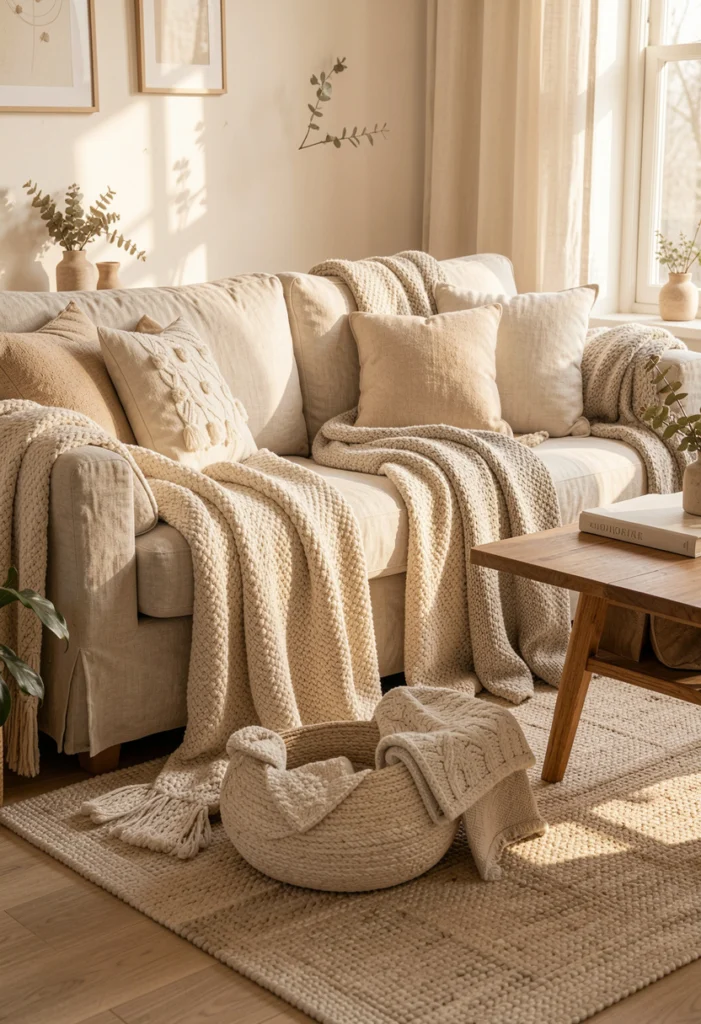
While Japandi style is minimal, it doesn’t sacrifice comfort. Soft textiles add warmth and make the living room feel inviting. Layer materials like linen, cotton, and wool in subtle tones to create depth without overwhelming the design.
A neutral area rug, textured throw blankets, and simple cushions can transform a space into a cozy retreat. Stick to natural fabrics and avoid synthetic materials to maintain authenticity.
6. Open Space and Decluttered Layout
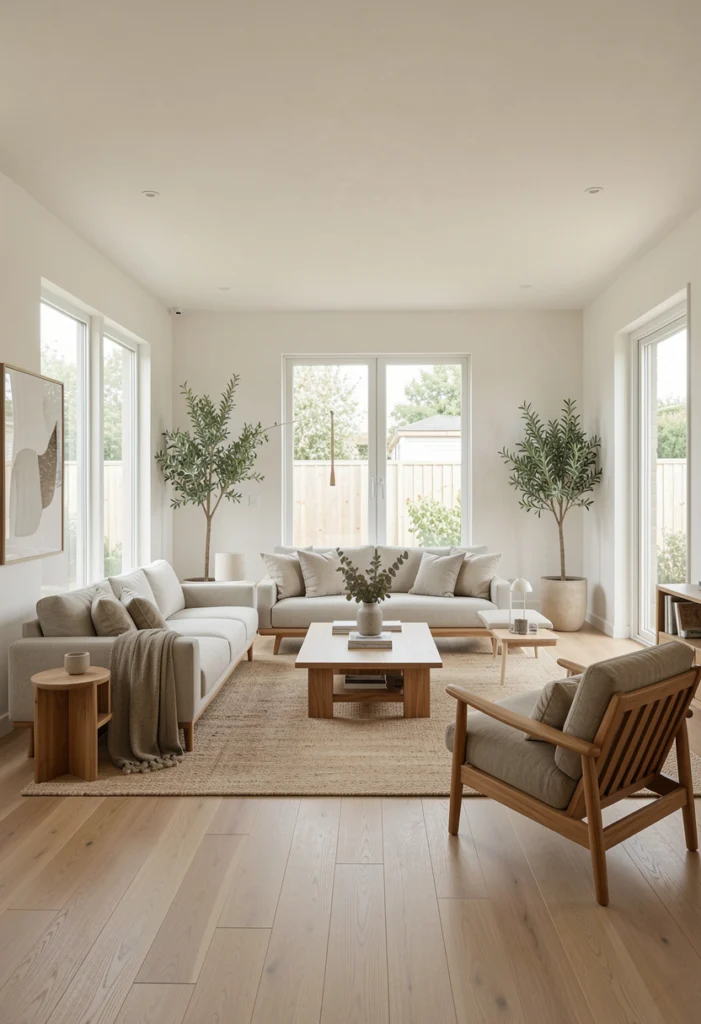
A key principle of Japandi design is maintaining open, uncluttered spaces. Furniture should be arranged to allow easy movement and visual flow. Avoid overcrowding the room with unnecessary pieces.
Keep only what you need and ensure each item has a clear purpose. This creates a sense of calm and order, making the space feel larger and more peaceful. Open layouts also allow natural light to spread evenly, enhancing the room’s overall ambiance.
7. Indoor Plants for a Zen Touch
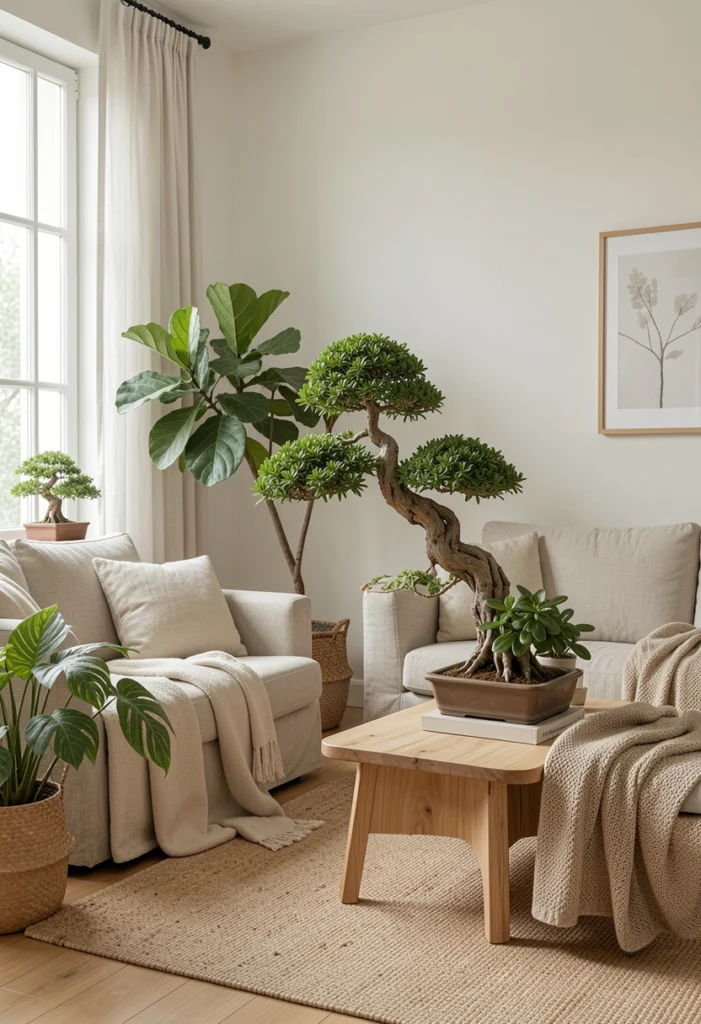
Plants bring life and tranquility to a Japandi living room. Choose simple, sculptural plants like bonsai, fiddle leaf figs, or snake plants that complement the minimalist aesthetic.
Avoid overcrowding one or two well-placed plants are enough to create impact. Use neutral or ceramic planters to keep the look cohesive. Plants reinforce the connection to nature and add a refreshing, calming presence to the space.
8. Statement Lighting with Simplicity
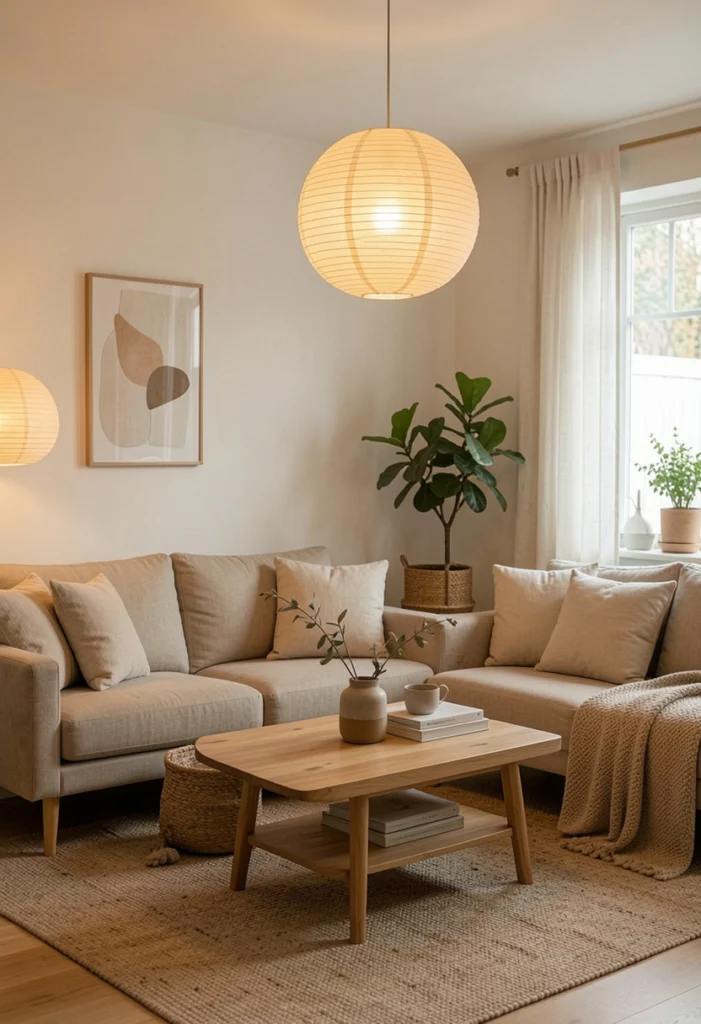
Lighting in Japandi interiors is both functional and artistic. Choose fixtures with clean lines and simple shapes, such as paper lanterns or minimalist pendant lights.
Soft, diffused lighting creates a warm and relaxing atmosphere. Avoid harsh overhead lights and instead use layered lighting with floor lamps or table lamps. Lighting should enhance the mood without dominating the space.
9. Functional Storage Solutions
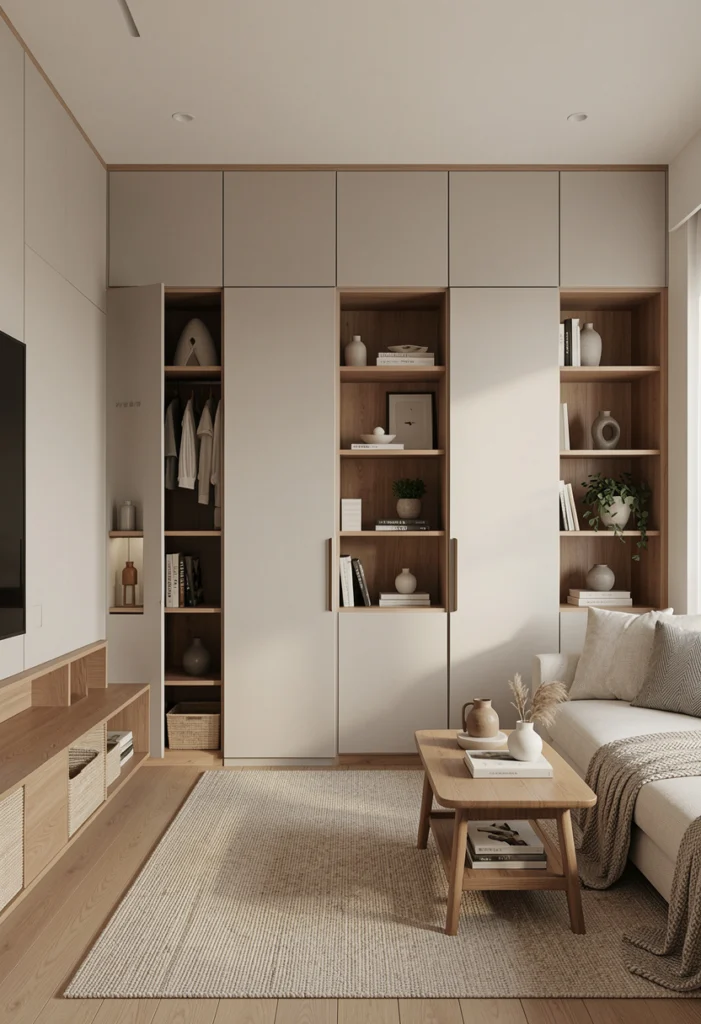
Storage in Japandi design is discreet and efficient. Built-in cabinets, low consoles, and hidden storage keep clutter out of sight while maintaining a clean aesthetic.
Choose furniture that serves multiple purposes, such as storage benches or coffee tables with compartments. This approach keeps the room organized without sacrificing style. A tidy space contributes to a peaceful and balanced environment.
10. Earthy Ceramics and Handmade Decor
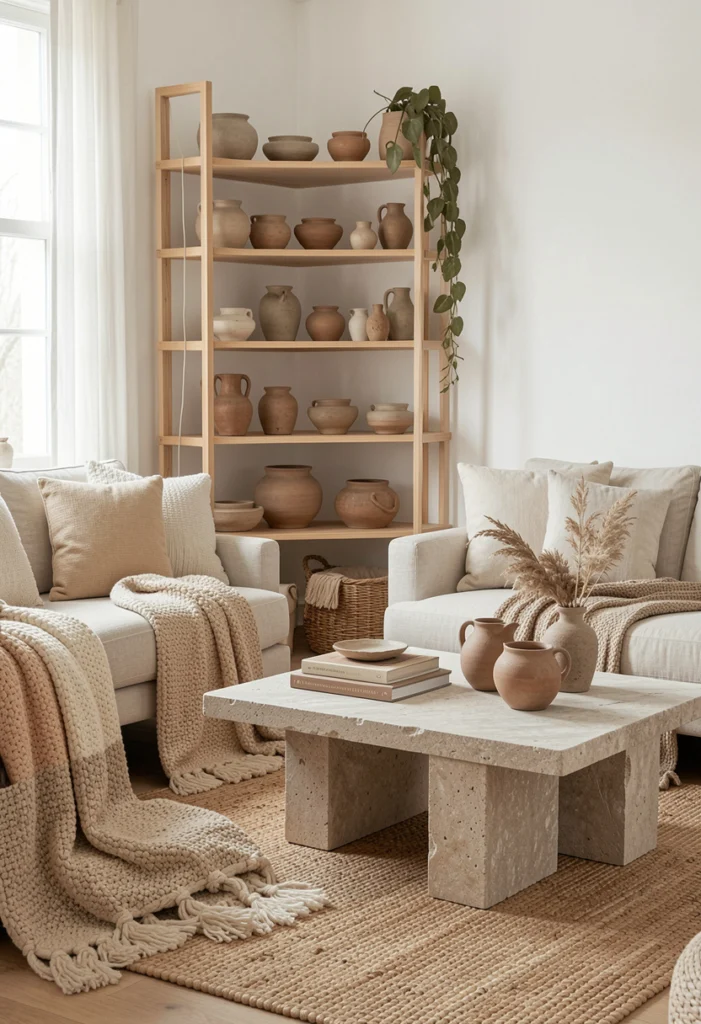
Handcrafted items add authenticity and character to a Japandi living room. Earthy ceramics, pottery, and handmade pieces bring subtle texture and uniqueness.
These items celebrate imperfection and craftsmanship, aligning with the Japanese concept of wabi-sabi. Display them sparingly to maintain a minimalist feel. Their organic shapes and tones enhance the natural aesthetic of the space.
11. Sliding Doors or Room Dividers
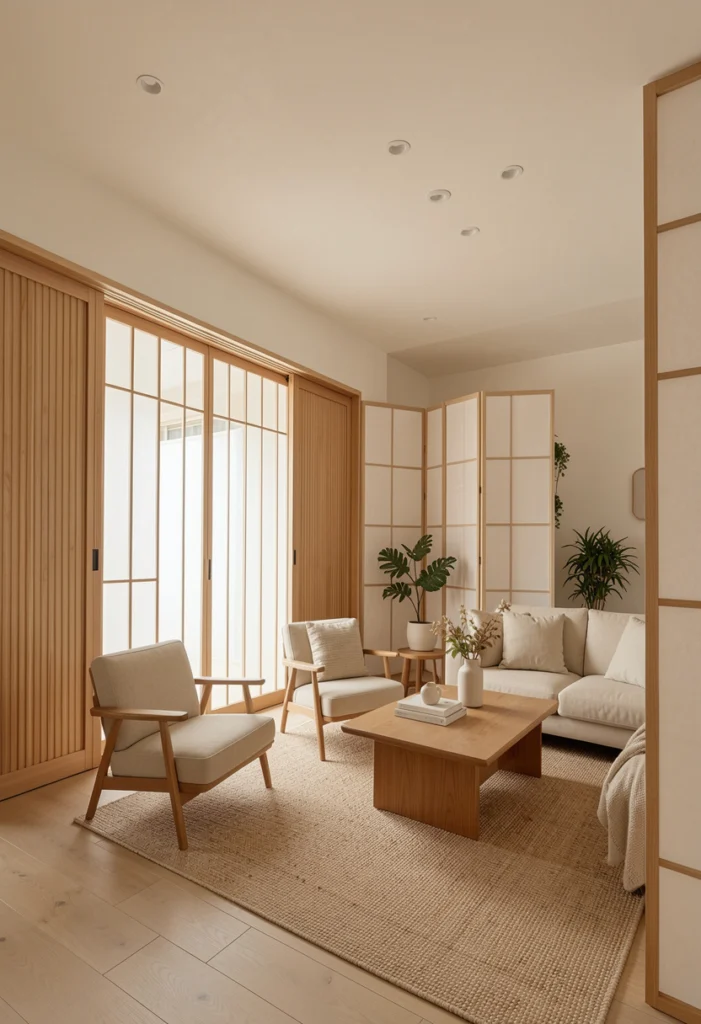
Incorporating sliding doors or lightweight dividers can enhance the Japandi aesthetic. Inspired by traditional Japanese interiors, these elements create flexible spaces while maintaining openness.
Use wood-framed panels or soft fabric screens to separate areas without blocking light. This adds both functionality and visual interest. It’s a practical solution for modern homes that need adaptable layouts.
12. Subtle Contrast with Black Accents
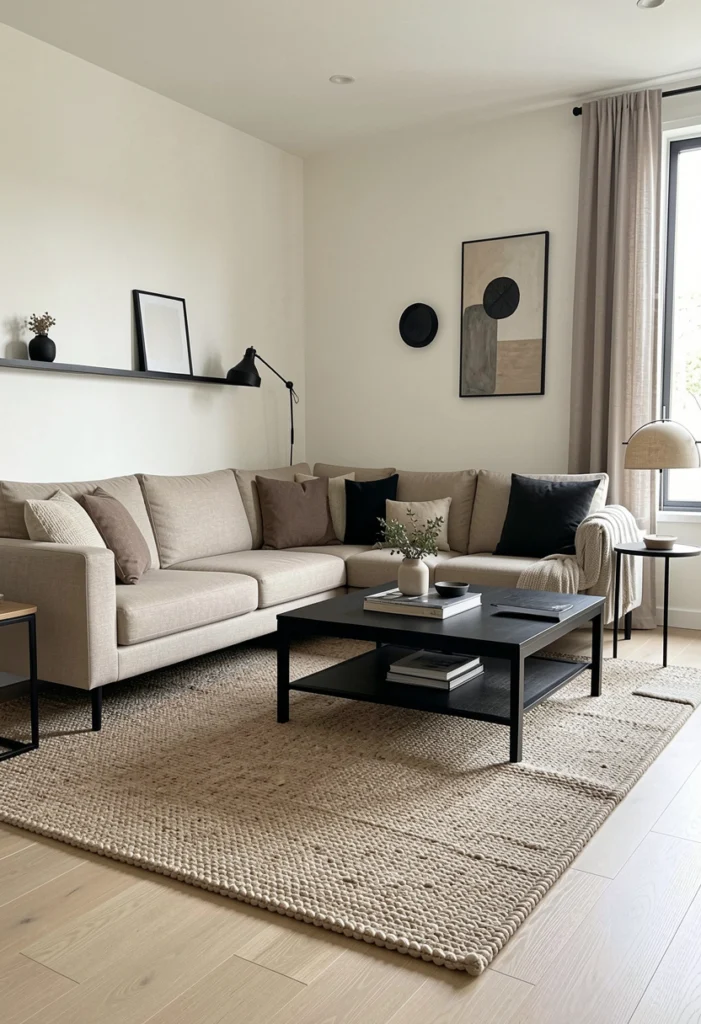
While Japandi palettes are mostly neutral, subtle black accents can add depth and definition. Use black sparingly in furniture legs, lighting fixtures, or decor pieces.
This contrast enhances the overall composition without overpowering the calm aesthetic. It also adds a modern edge to the design. Balance is key too much black can disrupt the softness of the space.
13. Floor Seating for Authentic Japandi Style
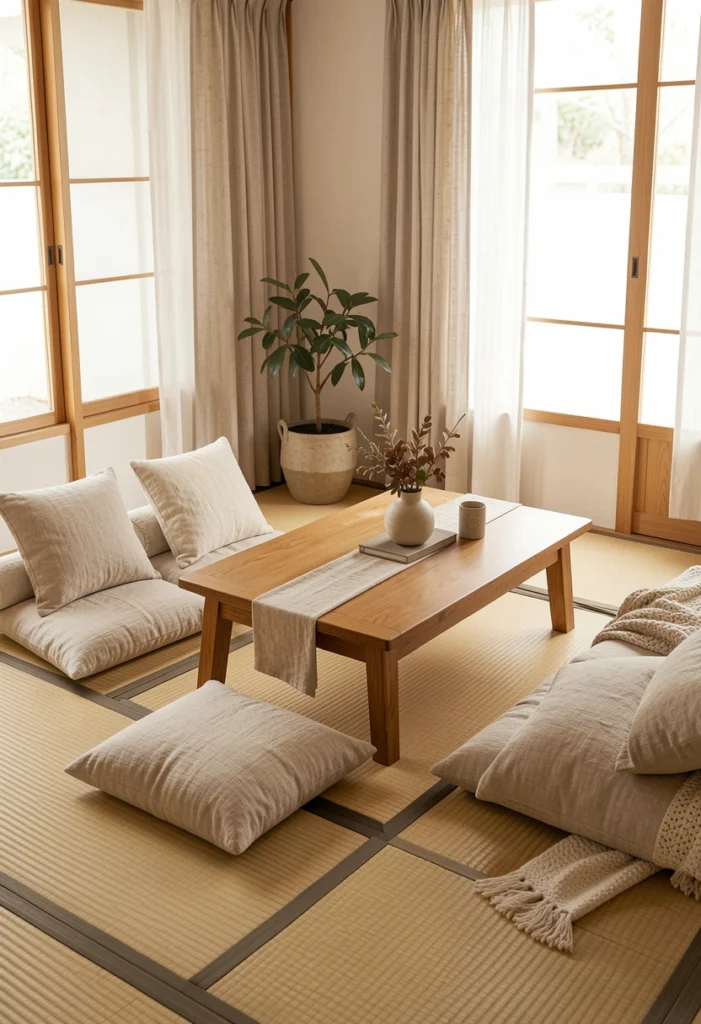
Floor seating is a nod to traditional Japanese living and works beautifully in Japandi interiors. Low cushions, poufs, or tatami mats create a relaxed and intimate setting.
This style encourages a closer connection to the space and promotes a laid-back lifestyle. Pair with a low table for a cohesive look. It’s perfect for creating a cozy corner within the living room.
14. Balanced Symmetry and Harmony
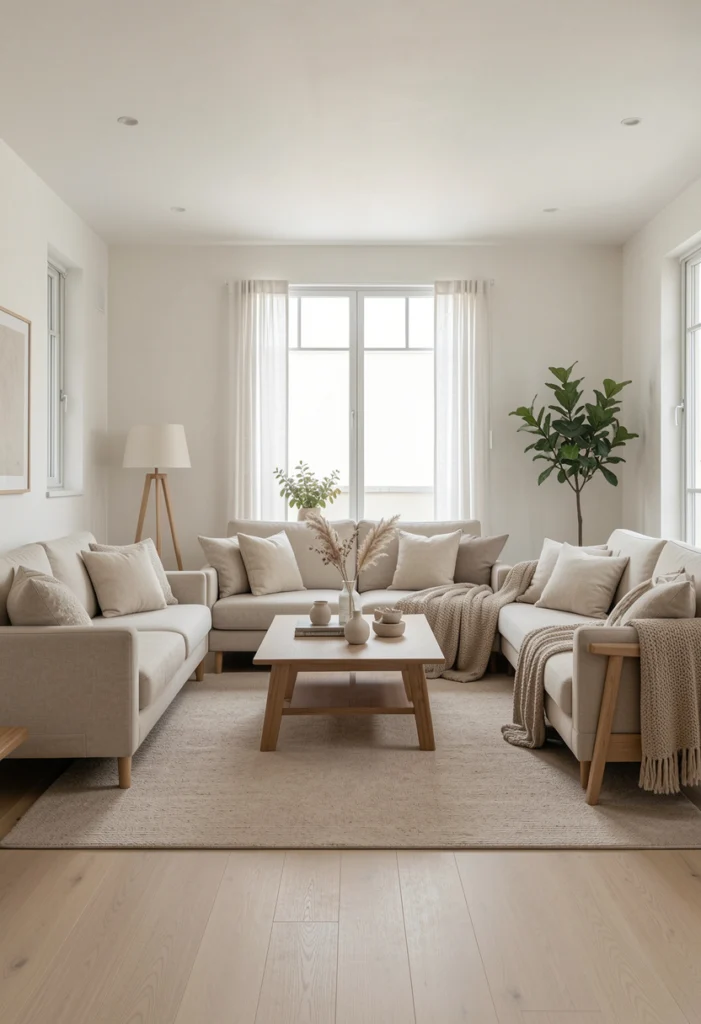
Japandi design thrives on balance and harmony. Arrange furniture and decor in a way that feels visually stable and pleasing. Symmetry doesn’t have to be perfect but should feel intentional.
Pair elements like matching lamps or balanced seating arrangements to create a sense of order. This approach enhances the calming effect of the room. A harmonious layout ties all design elements together beautifully.
Final Words
Creating a Japandi living room is less about following strict rules and more about embracing a mindful way of living. By combining Japanese simplicity with Scandinavian comfort, you can design a space that feels calm, functional, and effortlessly beautiful. Each element from neutral tones and natural materials to intentional decor works together to create a harmonious environment that supports relaxation and clarity.